
Quick answer
Plug-and-play hot tubs are best when you want easier installation and can accept lower power than a hardwired spa.
They can be a smart fit for small backyards, patios, and first-time buyers, but check outlet requirements, heating performance, insulation, cover quality, water capacity, and whether winter use matters in your climate.
Research links
Shopping starting points
Compare tubs after you know the outlet location, cover swing, filled weight, service-panel side, and winter expectations.

Quick picks
- Best for tiny patios: two-person plug-and-play tub with simple steps and cover clearance.
- Best for couples: compact three-person model with lounge seating only if the footprint still works.
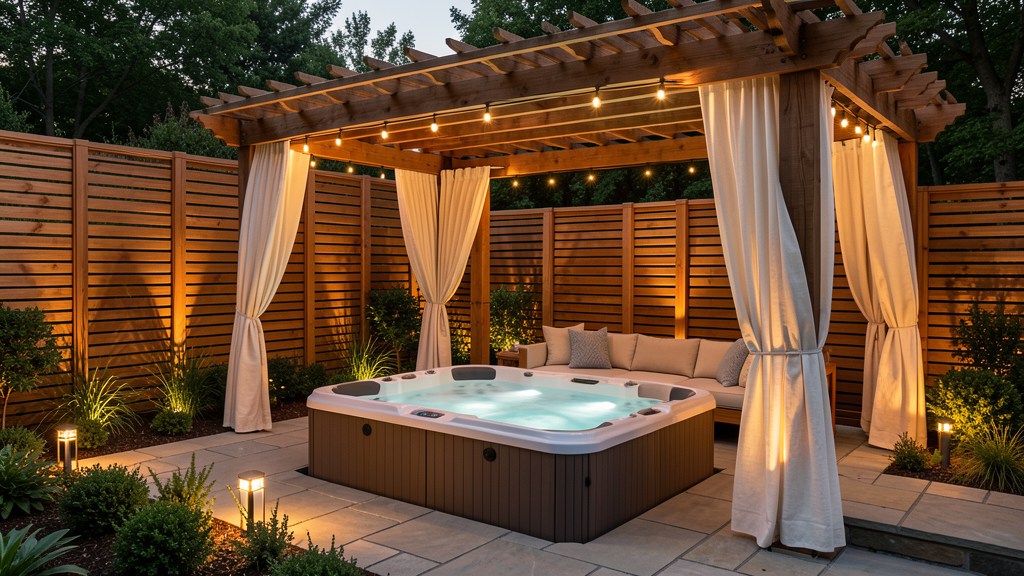
- Best design upgrade: small hot tub under a pergola with curtains, slat screens, and warm lighting.
- Best buying order: surface, electrical, cover clearance, delivery path, then tub model.
What plug-and-play really means
Plug-and-play usually means the hot tub can use a standard outlet instead of a hardwired spa panel. That can simplify installation, but it does not remove the need to check electrical safety, outlet location, GFCI protection, and manufacturer requirements.
Smaller plug-and-play tubs may heat more slowly than hardwired models, especially in cold weather. That is not a dealbreaker, but it should shape expectations.
Small backyard fit checklist
- Measure the tub with the cover open, with the cover open as well as closed. Cover lifters, steps, and service panels all need space.
- Check the filled weight. Patios, decks, and raised surfaces need the right support. When in doubt, ask a qualified pro before placing a heavy spa.
- Plan privacy before delivery. The tub is only relaxing if you are not staring directly into a neighbor window.
- Leave maintenance access. A tub wedged into a corner may photograph well once and annoy you every week after.
Best layout ideas
- A corner pergola layout works well when you want privacy overhead and on two sides. Use curtains or slat screens so it feels soft instead of boxed in.
- A patio-edge layout can make the tub feel integrated if the steps, towel hooks, and lighting line up with the door from the house.
- A side-yard spa can work if access is wide enough and the path stays dry, lit, and safe. Do not turn relaxation into an obstacle course.
Plug-and-play hot tub buyer framework
Plug-and-play is about simplicity, not magic
Plug-and-play hot tubs can reduce installation friction, but they still need a safe outlet, level surface, water access, drainage plan, cover clearance, and realistic expectations. The biggest tradeoff is usually power. They may heat more slowly or struggle more in cold weather than hardwired models.
Use case matters more than jet count
If the goal is casual soaking, a plug-and-play model can be a great small-yard entry point. If the goal is strong hydrotherapy, frequent winter use, or a larger family spa, compare performance carefully before choosing convenience over power.
The yard zone still needs design
Even a simple spa feels better with privacy screens, non-slip steps, towel hooks, storage, soft lighting, and a place to set drinks or robes. Budgeting for those details can make a smaller plug-and-play tub feel much more premium.
Plug-and-play hot tub checklist
| Question | Why it matters | What to confirm |
|---|---|---|
| Where is the outlet? | Cord routing and safety matter | Use a proper outdoor-rated setup and follow manufacturer requirements. |
| How cold is your climate? | Heating performance varies | Check insulation, cover quality, and winter-use reviews. |
| Where does water drain? | Patios and decks need a drainage plan | Avoid dumping water where it damages landscaping or structures. |
| Can you reach service areas? | Small yards can trap equipment | Leave access to panels, filters, and cover lifters. |
When plug-and-play is the right compromise
Best for first-time spa buyers
A plug-and-play hot tub can be the right first step when you want a real soaking zone without immediately committing to a hardwired spa project. It is especially useful for small patios where budget, access, and install complexity matter.
Not always best for cold climates
The convenience tradeoff is performance. If the tub will be used in cold weather, compare insulation, cover quality, heating behavior, water volume, and owner feedback. A model that works beautifully in mild weather may feel underpowered in winter.
Make the surrounding zone permanent
Even if the tub is simple, the area around it should feel intentional. Add a stable surface, privacy, steps, lighting, towel hooks, and storage. That makes the purchase feel like a backyard upgrade rather than a temporary appliance.
Planning summary
Plug-and-play hot tubs are best for small-yard buyers who want simpler installation and casual soaking, but they still require safe power, a level surface, drainage, privacy, cover clearance, and realistic expectations about heating performance.
How to make the final decision
Check the outlet, cover, and winter expectations
Plug-and-play tubs are appealing because they lower the install friction, but they still need a safe outdoor outlet setup, a level base, drainage plan, and enough space for the cover to open. Measure the tub as used, as it will sit in the yard.
Be honest about climate. In mild weather, a 110V spa can be a nice first hot tub. In colder conditions, slower heating and weaker heat recovery may frustrate people who expect a hardwired spa experience.
Read the manual before buying. Look for filled weight, service-panel location, filter access, cover dimensions, GFCI requirements, extension-cord warnings, insulation notes, and warranty exclusions. Those details decide whether “easy setup” is actually easy.
Final buying rule
Buy plug-and-play when simplicity matters more than maximum performance. If you want stronger jets, faster heating, or year-round cold-climate performance, price a hardwired compact spa before settling.
Final recommendation
A plug-and-play tub makes sense when the outlet, base, cover clearance, and climate all cooperate. If winter performance matters, compare hardwired compact spas before buying.
FAQ
Are plug-and-play hot tubs good for small backyards?
Yes. Plug-and-play hot tubs can be a strong fit for small backyards because they are often compact and simpler to place. You still need to confirm electrical safety, weight, drainage, cover clearance, and service access.
Do plug-and-play hot tubs need a special outlet?
Many plug-and-play hot tubs use a standard outlet, but requirements vary. Always follow the manufacturer instructions and confirm GFCI protection and safe placement.
What size hot tub is best for a small backyard?
A two-person or compact three-person hot tub is usually best for a small backyard. The right choice depends on the available pad, cover clearance, steps, privacy, and access path.