
Quick answer
Outdoor kitchen costs depend more on utilities and structure than the grill itself.
A simple grill island is very different from a covered kitchen with counters, plumbing, lighting, appliances, storage, and stonework. Price the base, utilities, weather protection, and installation before falling in love with appliances.
Research links
Shopping starting points
Use these links after you know the cooking style, utility access, counter length, shade needs, and install path.

Start with the real use case
A backyard kitchen for weeknight burgers is not the same project as a full hosting kitchen with sink, fridge, storage, pizza oven, bar seating, lighting, and a covered structure. Start by naming the primary use: casual grilling, weekend entertaining, poolside service, or a full outdoor cooking room.
That decision controls nearly every budget line. A simple grill island may only need counter space and storage. A true outdoor kitchen may involve electrical, gas, plumbing, drainage, masonry, permits, shade, and a contractor who knows outdoor-rated materials.
Budget ranges to think in
Use ranges as planning buckets, not promises. A lean grill station might be mostly product cost plus a level pad. A middle-tier outdoor kitchen usually adds better counters, storage, seating, lighting, and a finished surface. A premium build may include masonry, utilities, roof coverage, refrigeration, heaters, and custom layout work.
The expensive mistakes usually happen when homeowners buy appliances first and then discover the space needs more slab work, electrical, gas routing, or weather protection than expected.
Hidden costs that surprise people
Plan for base prep, delivery access, gas or electrical work, counter overhangs, cover clearance, drainage, lighting, outdoor-rated outlets, shade, trash storage, and the path between the indoor kitchen and the outdoor cooking zone.
If the kitchen sits far from the house, the convenience drops. If it sits too close without ventilation or clearance, it can feel cramped. Measure the flow before falling in love with a layout photo.
Best layout for resale-friendly outdoor kitchens
The safest layout is a clean cooking wall or L-shaped island with serving space, weather-tough storage, warm lighting, and nearby seating. It looks intentional without overbuilding for one owner’s exact hobby.
If you want pizza ovens, smokers, or specialty appliances, leave flexibility. A beautiful outdoor kitchen should still make sense if one appliance gets swapped later.
Outdoor kitchen budget planner: what actually changes the price
The grill island is only one line item
The biggest mistake is pricing an outdoor kitchen like it is just a grill and counter. The visible island matters, but the hidden work often decides the real budget: base preparation, utility runs, drainage, lighting, ventilation, weather protection, and whether the kitchen needs to survive freeze/thaw cycles, heavy rain, direct sun, or coastal air.
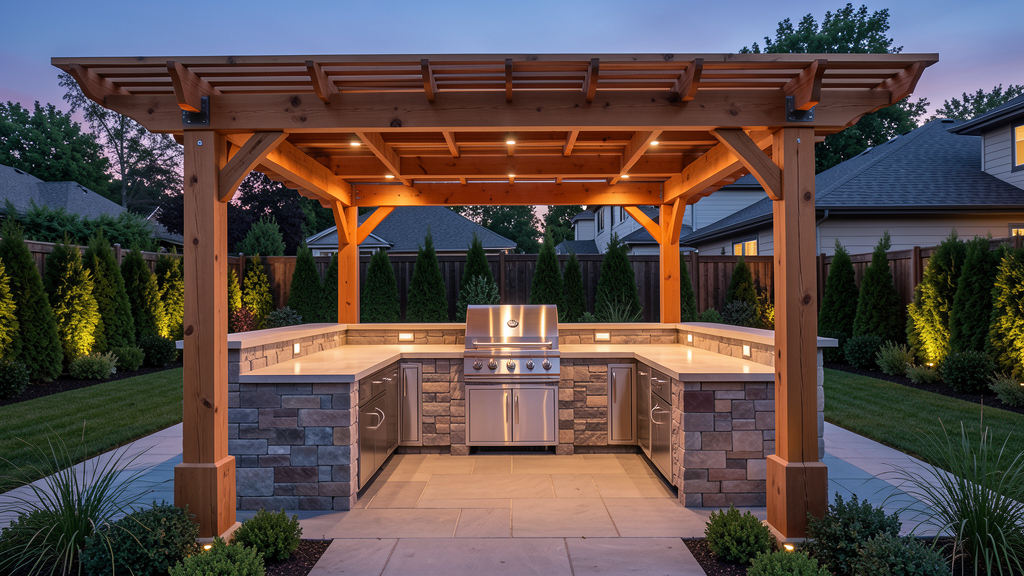
A basic patio cooking station can stay relatively simple. A finished outdoor kitchen with stone, appliances, storage, sink, roof, heaters, and lighting behaves more like a small exterior construction project. That is why two kitchens with the same grill can land in completely different budget ranges.
Start with three budget tiers
Starter setup: best for readers who mainly want a grill zone that looks intentional. Think prefab island, grill cart, prep table, weatherproof storage, lighting, and a clean surface underfoot.
Mid-range setup: best for homeowners who entertain often. This is where built-in grills, longer counters, trash storage, refrigerator drawers, pergola coverage, and better lighting start to matter.
Custom build: best when the outdoor kitchen is part of a full backyard remodel. This can include masonry, plumbing, electrical, appliances, seating walls, roof structures, heaters, fans, and integrated landscape lighting.
The boring questions to answer before choosing appliances
Where will gas, electric, and water come from? Can installers reach the build area without destroying landscaping? Does the counter need shade? Will smoke blow toward seating, windows, or neighbors? Is there enough clearance for grill lids, doors, drawers, and people walking behind stools?
If those questions are not answered first, the “best” appliance list is almost useless. A premium grill in the wrong location becomes annoying fast.
Outdoor kitchen decision matrix
| Setup type | Best for | Watch-outs |
|---|---|---|
| Prefab grill island | Fast upgrade, lower planning burden, smaller patios | Confirm dimensions, delivery access, counter material, and weather protection. |
| Built-in grill wall | Cleaner look and better entertaining flow | Needs proper clearances, utility planning, ventilation, and storage. |
| Covered outdoor kitchen | Year-round cooking and premium backyard feel | Roof structure, smoke movement, lighting, fans, and local rules matter. |
| Full custom kitchen | High-end remodels and frequent hosting | Requires design, trades, budget control, permits, and long-term maintenance planning. |
What to measure before you ask for quotes
Measure the real working zone
Measure the patio or slab, but also measure walking paths, door swings, grill-lid clearance, stool depth, and the distance from the indoor kitchen. Most outdoor kitchens fail because they look good in a rendering but pinch traffic once people are cooking, sitting, and carrying food.
Leave room behind bar seating. Leave landing space beside the grill. Leave service access for appliances. If you are adding a sink or refrigerator, confirm utility routes before you design around them.
Plan the weather strategy
Outdoor kitchens need a weather plan. Sun can make counters unusable in the afternoon. Rain can ruin the experience even when the appliances are rated for outdoor use. Wind can push smoke into the lounge zone. Shade, orientation, and drainage are part of the kitchen, not afterthoughts.
Quote review checklist before you commit
Ask what is included and what is assumed
Outdoor kitchen quotes can look similar while hiding very different scopes. Ask whether the quote includes demolition, base preparation, utility trenching, electrical, plumbing, permits, countertop templating, appliance installation, finish sealing, cleanup, and appliance delivery. If those are not listed, they may become change orders later.
Also ask what happens if the existing patio is not level, if the utility run is longer than expected, or if a selected appliance is delayed. The best quote is not always the cheapest one. The best quote is the one that makes fewer assumptions.
Design for maintenance from day one
Leave access to shutoffs, outlets, appliance panels, drains, and storage compartments. Choose materials you are willing to clean. Think through grease, pollen, ash, leaves, bugs, and winter covers. A beautiful outdoor kitchen gets used more when cleaning and seasonal maintenance are not miserable.
Planning summary
If you are comparing outdoor kitchen options, decide the scope first: portable station, built-in grill island, covered kitchen, or full custom build. Then price utilities, structure, surfaces, weather protection, and access before comparing appliances.
Which outdoor kitchen budget path should you choose?
| Budget path | Best for | Avoid if | Decision trigger |
|---|---|---|---|
| Grill island only | Lower-cost upgrades, small patios, and buyers who mostly cook outside on weekends | You expect full prep, sink, fridge, storage, and entertaining function | Choose this when cooking is the goal and utilities should stay simple. |
| Modular outdoor kitchen | Faster planning, flexible layouts, and fewer custom-build surprises | Your space needs exact dimensions, built-in utilities, or a fully custom look | Choose this when speed and predictability matter more than full customization. |
| Custom built-in kitchen | High-end patios, serious hosting, and long-term property upgrades | You have not budgeted for utilities, counters, trades, permits, and weatherproofing | Choose this when the kitchen is a permanent backyard centerpiece. |
| Phased build | Budget control and testing the layout before going all-in | You need a finished resort-style space immediately | Choose this when grill, shade, seating, and storage can be added in layers. |
Outdoor kitchen buyer scorecard
Ask what the kitchen must do before asking what it costs
A grill island, prep station, sink, fridge, pizza oven, bar seating, and storage all solve different problems. Price makes more sense after the cooking style, hosting style, utilities, shade, and traffic flow are clear.
Compare quotes by scope, not headline number
The cheaper quote may exclude counters, utility runs, drainage, electrical, appliance cutouts, permits, delivery, or site prep. Make every quote answer the same scope questions before deciding which path is actually better.
Outdoor kitchen trust checks before getting quotes
Separate cabinet, appliance, utility, and surface costs
Outdoor kitchens get expensive because several trades meet in one small space. Compare cabinets, counters, appliances, gas, electrical, plumbing, drainage, shade, ventilation, permits, and installation labor as separate cost layers instead of one vague backyard number.
Confirm outdoor-rated materials and service access
Before buying cabinets or appliances, check outdoor rating, warranty exclusions, ventilation clearances, fuel requirements, replacement part availability, and how a technician would service the setup after installation. Pretty renderings do not matter if the grill cannot vent or be repaired.
Final recommendation
Price the outdoor kitchen as a cooking zone, not a grill purchase. Utilities, counters, shade, storage, lighting, and traffic flow decide whether it feels finished.
FAQ
How much should I budget for an outdoor kitchen?
Budget depends on size, appliances, counters, utilities, base work, and whether it is modular or custom. Start with a layout and utility plan before comparing product prices.
Do outdoor kitchens add resale value?
A well-planned outdoor kitchen can help the backyard feel more finished, especially in entertaining-friendly markets. Overly custom layouts or poorly protected appliances may be less appealing.
What is the biggest outdoor kitchen mistake?
Buying appliances before planning placement, clearance, utilities, weather protection, and seating. The layout should come first.