
Quick answer
Choose a pergola for an open-air patio feel and a gazebo for stronger weather coverage.
A pergola is usually better for shade, style, vines, curtains, and defining a lounge or hot tub zone. A gazebo is better when you want a roof, more shelter from rain, and a more enclosed outdoor room.
Research links
Shopping starting points
Use these starting points after you know the post locations, shade goal, weather-cover needs, and whether the structure needs permits or anchoring.
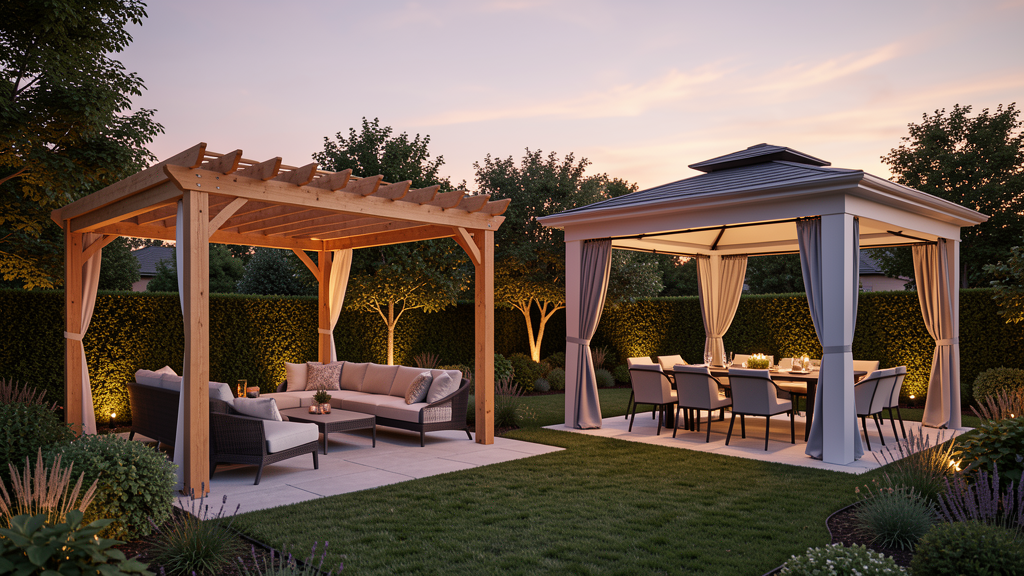

Where pergolas win
Pergolas usually look lighter and more modern. They work well over lounge seating, grill zones, outdoor dining, and hot tubs where you want partial shade and a designed focal point.
They are also easier to style with string lights, curtains, climbing plants, privacy screens, and heaters. For photo-ready backyard design, pergolas are incredibly flexible.
Where gazebos win
Gazebos win when coverage matters. If you want a more protected place for seating, bug screens, a hot tub cover zone, or a destination pavilion, a gazebo can be more practical.
A hardtop gazebo can feel more substantial than a pergola, but it also takes up more visual weight. In a small yard, that can either feel cozy or crowded.
How to choose for hot tubs and outdoor kitchens
For hot tubs, a pergola often looks better if you already have privacy from fencing or screens. A gazebo can be better when you need more overhead protection or want an enclosed spa feel.
For outdoor kitchens, pergolas look great but do not automatically solve ventilation, rain, or appliance protection. If cooking under a structure, check clearance and safety requirements before building.
Pergola vs gazebo: how to choose by use case
Choose by the problem, not the look
A pergola and gazebo can both make a backyard look more finished, but they solve different problems. A pergola frames a space. A gazebo protects a space. If the goal is a beautiful patio dining zone, a pergola may be enough. If the goal is sitting outside during light rain or keeping a hot tub covered, a gazebo or pavilion-style roof may make more sense.
The right answer also depends on scale. In a small yard, a heavy gazebo can dominate the whole view. In a large yard, a small pergola may not feel substantial enough unless it is tied into a seating, kitchen, or spa zone.
Pergolas are better for flexible style
Pergolas work well when you want filtered shade, curtains, vines, lighting, heaters, or an architectural frame around an existing patio. They usually feel lighter and easier to blend with modern outdoor furniture. They are also a strong choice around hot tubs if privacy is handled with side screens or landscaping.
Gazebos are better for shelter
Gazebos are stronger when overhead coverage is the priority. They can make a seating area feel like a destination and can protect furniture better than an open pergola. The tradeoff is visual weight, roof maintenance, wind considerations, and making sure the structure does not make the yard feel cramped.
Structure comparison
| Feature | Pergola | Gazebo |
|---|---|---|
| Shade | Filtered shade unless covered or louvered | Stronger shade from a full roof |
| Rain protection | Limited unless a canopy/cover is added | Better rain protection |
| Visual feel | Open, architectural, lighter | Room-like, enclosed, heavier |
| Best zones | Dining patios, outdoor kitchens, hot tub corners | Covered lounge areas, spa shelters, destination seating |
| Main risk | Not enough protection if you expect a roof | Can overpower a small yard |
Questions to answer before buying a kit
Check surface and anchoring
Both structures need a stable, level base. A pergola that is not anchored correctly can feel flimsy, and a gazebo with a full roof has more wind load to consider. Check manufacturer anchoring requirements and local rules before ordering.
Think through privacy and lighting
A structure only feels finished when it has a lighting plan and privacy plan. For pergolas, that might mean curtains, slat panels, vines, string lights, or sconces. For gazebos, it might mean screens, a fan, integrated lighting, or furniture scaled to the footprint.
Real backyard scenarios
For a hot tub corner
A pergola usually works best when the tub already has side privacy from fencing, screens, or landscaping. It makes the area look designed without trapping steam or making the space feel boxed in. A gazebo works better when the main problem is overhead weather protection, especially if the hot tub is used in rain or snow.
For outdoor dining
A pergola gives dining areas a lighter, more open feel. Add shade cloth, vines, curtains, or lighting if you need comfort. A gazebo can work for dining too, but it should be scaled carefully so chairs can move and people can walk around the table without bumping posts.
For resale-friendly design
Most homeowners should avoid overbuilding the structure before the rest of the yard is planned. A clean pergola over a well-designed patio is usually easier to visually integrate than a bulky gazebo squeezed into the wrong corner. If you want the yard to feel more like an outdoor room, a gazebo or pavilion can be worth it, but only when the footprint has room to breathe.
Planning summary
A pergola is best for open-air style, filtered shade, lighting, curtains, and defining a patio zone. A gazebo is best for stronger cover, a destination seating area, and more weather protection. Choose based on the job the structure needs to do.
How to make the final decision
Decide whether you need shade or shelter
A pergola defines a space and softens the sun, but it does not behave like a roof unless you add panels, canopy fabric, or another cover system. A gazebo is closer to an outdoor room. It gives stronger overhead protection but usually looks heavier and asks for more yard.
Use the furniture plan as the test. Dining sets usually need more predictable coverage. Lounge seating can work beautifully under a pergola with curtains, plants, or lights. Hot tubs need height, airflow, cover clearance, and privacy before they need a dramatic roofline.
Before buying a kit, check anchoring, wind guidance, post locations, drainage, roof load language, permit requirements, and whether the structure blocks key views from inside the house.
Final buying rule
Choose a pergola when you want an open-air frame that makes the patio feel designed. Choose a gazebo when weather coverage and a more enclosed destination matter more than visual lightness.
Final recommendation
Use a pergola to frame a patio and add flexible shade. Use a gazebo when you need a true destination with stronger weather coverage.
FAQ
Is a pergola cheaper than a gazebo?
Often, but not always. Simple pergolas can be less expensive, while premium motorized pergolas can cost more than basic gazebos.
Which is better for shade?
A gazebo usually gives stronger shade and rain coverage. A pergola gives filtered shade unless you add a canopy, louvers, vines, or curtains.
Which looks better in a small backyard?
A pergola usually feels lighter in a small yard, while a gazebo can work if it is scaled carefully and does not dominate the space.