
Planning summary
For most homes, the best hot tub enclosure is open enough to breathe and private enough to actually use.
Start with a roof and partial side screening, then add more enclosure only where the yard needs it. The structure has to clear the cover lifter, leave the spa controls and service panels reachable, keep steps dry, shed rain away from the entry, and give steam somewhere to go. If a gazebo looks great but boxes the tub in, skip it.
Research links
Shop after the measurements, not before
Use these searches to compare structure types after you know the spa footprint, cover direction, service side, walking path, and local rules.
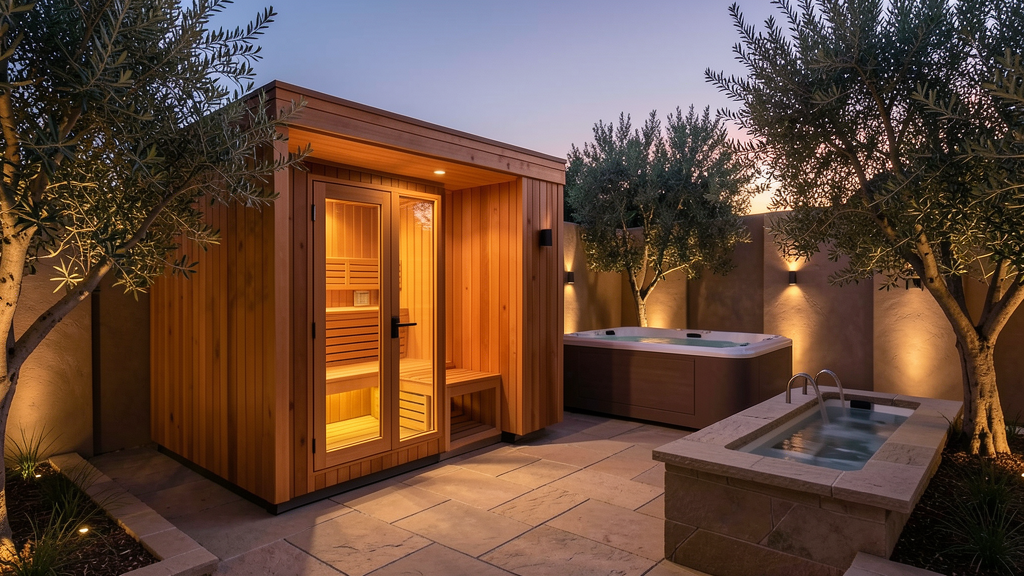
Best hot tub gazebo and enclosure types
Open-sided gazebo: best default for privacy plus airflow
An open-sided gazebo is the safest starting point for a lot of hot tub patios. It gives the spa a real roof, frames the area, and blocks some weather without trapping every bit of steam under a low lid. Add one or two privacy screens only where sightlines are a problem.
This is the easiest structure to live with when the spa is already installed, the yard is compact, or the service side needs to stay visible. The mistake is buying a gazebo that is sized around the outside dimensions of the tub only. You also need the open cover, steps, towel hook, control panel, filter access, and a person carrying a test strip kit.
Louvered pergola: best for adjustable shade
A louvered pergola works well when the hot tub gets harsh sun in summer but still needs open air. The adjustable roof can cut glare during the day and open back up when steam, humidity, or night sky views matter more.
The weak point is complexity. Louvers, motors, gutters, sensors, and lights need service access and weather protection. If the roof closes, know where water runs. If the structure is motorized, know how power reaches it and what happens when a control fails. The louvered pergola kit guide goes deeper on manual versus motorized choices.
Slatted privacy pavilion: best for overlooked yards
A slatted pavilion or pergola with vertical privacy walls is useful when the main problem is a second-story window, nearby deck, or side-yard fence line. Slats can screen the view while still letting air move through the tub zone.
Angle matters. A screen that blocks the neighbor from one chair might do nothing when someone is stepping into the tub. Test the sightline from the waterline, the step, and the towel spot. Also keep at least one side friendly for service and cleaning.
Screened enclosure: best for bugs, with a humidity warning
A screened hot tub enclosure can be great in mosquito-heavy areas. It can also become annoying if the screen walls make the area damp, foggy, or awkward to clean. The more you enclose, the more you need airflow, drainage, and materials that do not mind moisture.
This is where a cheap screen room can backfire. Zippers jam, roof panels flap, screens collect pollen, and the entry path gets slippery. A screened setup should still leave a wide door, a dry landing, a cover path, and access to the equipment side.
Custom pavilion: best for high-end builds
A custom pavilion makes sense when the spa is part of a larger patio with stone, outdoor lighting, sound, a cold plunge, a shower, or a full seating zone. It can look far better than a kit because the roofline, posts, privacy, and drainage can be designed around the tub instead of forced around it.
The price is not the only drawback. Custom work pulls in permits, footings, roof loads, electrical, inspections, drainage, and contractor coordination. If the hot tub location is not final, solve that before designing the pavilion.
Hot tub gazebo comparison
| Structure type | Best for | Watch out for | Buy only after checking |
|---|---|---|---|
| Open-sided gazebo | Most backyard spa patios that need a roof, partial privacy, and easy airflow | Posts too close to steps, roof too low, or screens added on every side | Cover lifter swing, service panels, spa controls, drainage, anchoring, and roof-load language |
| Louvered pergola | Sunny patios where adjustable shade matters and the spa should still feel outdoors | Motorized parts, gutter runoff, wiring, and louvers interfering with lights or steam path | Manual override, power route, water runoff, local rules, and service access for the roof |
| Slatted privacy pavilion | Side yards, overlooked fences, and yards with one or two bad sightlines | Privacy walls that block airflow or trap the maintenance side | Sightlines from water level, entry steps, towel spot, service side, and neighbor windows |
| Screened enclosure | Bug-heavy climates and evening use near trees or water | Humidity, screen cleaning, narrow doors, slick thresholds, and cover movement | Ventilation, drainage, door width, roof material, replacement screen parts, and cleaning access |
| Custom pavilion | Premium spa patios, pool terraces, outdoor rooms, and full backyard resort builds | Permits, footings, engineering, lighting, drainage, and budget creep | Contractor scope, code review, roof loads, electrical plan, gutter path, and access for future spa replacement |
The five-minute hot tub enclosure fit test
Before comparing products, walk outside with painter's tape and a tape measure. Mark the tub, then mark the likely posts, door, screen panels, steps, cover path, and towel zone. This low-tech pass catches most bad buys before the cart page starts looking persuasive.
1. Open the cover in the direction it will actually move
The cover is the bully in this layout. It needs a place to fold, stand, slide, or lift without hitting a post, wall, privacy screen, roof bracket, or hanging light. If the cover lifter is not chosen yet, pick the lifter style before sizing the gazebo.
Do not guess the clearance. Cover lifters vary by model and mounting style. Check the hot tub manual, lifter instructions, and seller drawings. If a product page does not make the movement clear, that is a buying risk, not a cute little mystery.
2. Find the service panel and protect that side
The enclosure should leave the equipment side boringly accessible. Filters, pumps, controls, drains, and cabinet panels should not require moving a privacy wall or crawling behind a bench. If a service tech cannot reach the panel, the structure is wrong.
This matters even more for built-in looking setups. A tub can be beautiful on delivery day and miserable the first time a panel has to come off in cold weather.
3. Stand in the wet traffic path
Step out of the imaginary tub. Where does your foot land? Where is the towel? Where does water drip? Where does the cover drip? Where does a guest place a robe? The best enclosure keeps the wet path short, lit, and non-slip.
If the only dry landing is outside the gazebo, people will track water through the patio anyway. If the steps sit under a roof edge that dumps rain, the structure is actively making the spa worse.
4. Check steam and air movement
Hot water throws moisture into the structure every time the cover opens. Outdoor setups are forgiving because air can move. Fully enclosed rooms are less forgiving and need a real humidity plan. Master Spas notes that indoor hot tub spaces need ventilation to manage humidity and reduce mold or mildew risk. That same principle should make outdoor buyers cautious about closing in a gazebo too tightly.
Look for open sides, high vents, gaps above privacy screens, operable panels, or a roof shape that lets warm air escape. If the enclosure smells damp in your head, it will probably be worse in January.
5. Walk the delivery and future replacement route
Gazebo timing matters. If the tub has not been delivered yet, do not build a structure that blocks the delivery path. Jacuzzi and Master Spas both point buyers toward delivery planning: gates, doorway widths, overhead clearance, and a clear route to the final pad matter. A structure can also block the future route when the spa eventually needs replacement.
Think beyond the first install. Can the tub come out without dismantling half the structure? Can a cover, pump, panel, or set of steps be replaced later? Luxury is nice. A layout that can be serviced is nicer.
Buyer risks that matter with hot tub enclosures
Humidity and trapped steam
A hot tub enclosure is not a normal shade structure. The roof and side panels live above warm water, chemical vapor, splash, and wet towels. Materials, fasteners, finish, fabric, screens, and lights all need to handle a damp zone.
Wood can look great, but it needs care. Metal can last, but corrosion language matters. Fabric roofs can be cheap, but sagging and mildew are real risks. Polycarbonate panels can block rain, but they still need cleaning and drainage.
Weak anchoring and vague weather claims
Skip any gazebo that makes weather sound magical without telling you how it anchors, what surface it expects, and what wind or roof-load guidance applies. A hot tub patio is not a place for a flimsy sail that turns dramatic during the first storm.
Snow, coastal exposure, open fields, tall fences, and raised decks all change the conversation. Local rules and installer advice beat retailer bullet points.
Blocked controls and maintenance
The side with the keypad, filters, drain, and cabinet access should stay easy. Privacy screens are often installed exactly where maintenance needs to happen because that side faces a neighbor. If privacy and service fight each other, use angled slats, planting, or partial screens instead of a fixed wall.
Electrical shortcuts near water
Lighting, outlets, fans, heaters, motors, speakers, and smart controls can make the hot tub zone feel finished. They also move the project into outdoor electrical territory. Use qualified help where wet-location fixtures, dedicated circuits, bonding, GFCI protection, local code, or manufacturer requirements apply.
Do not run a casual extension cord into a spa gazebo because the string lights looked good online. That is how Pinterest gets people in trouble.
Permits, setbacks, and HOA rules
Local rules can care about the hot tub, the electrical work, the roofed structure, the height, the setback, the deck, the fence, or all of it. Master Spas notes that some areas may not require a hot tub permit, while others may have electrical, setback, barrier, or fencing rules. A gazebo can add another layer because it may count as a structure.
Check before ordering. It is boring, yes. It is also much cheaper than taking down a roof because the side yard setback was wrong.
Best choice by backyard situation
Small backyard with close neighbors
Use a compact open-sided gazebo with one or two targeted privacy screens. Keep the service side open, place the screen on the bad sightline, and use planting or a fence upgrade for the rest. For more placement help, pair this with the small backyard hot tub layout guide.
Deck hot tub
Be extra careful. The deck has to support the loaded spa, people, structure loads, and movement around the tub. Jacuzzi points buyers toward deck inspection before installation. A roofed structure can add wind and load questions, so this is contractor territory, not guesswork.
Cold climate spa patio
Prioritize roof strength, snow guidance, a short towel path, lighting, nonslip steps, and enough side openness for steam. Fully closing the tub can feel tempting in winter, but humidity and condensation become bigger issues.
Luxury pool terrace
A custom pavilion or louvered pergola usually looks better than a kit. Build the structure around the spa, seating, towel storage, pool path, lighting, and drainage together. If a cold plunge or sauna is nearby, leave dry walking room between stations.
Bug-heavy yard
Use a screened enclosure only if it has strong doors, airflow, easy cleaning, and enough room around the tub. A removable or seasonal screen can be smarter than a permanent cage if bugs are only bad for part of the year.
Shopping rules before buying a hot tub gazebo
- Measure the spa with the cover open, not closed.
- Confirm the cover lifter style before choosing posts or side walls.
- Leave the equipment side easy to reach.
- Choose privacy screens by sightline, not by symmetry.
- Check roof height, entry clearance, and overhead branches.
- Map rain runoff away from steps, controls, doors, and walkways.
- Verify anchoring instructions for the actual patio, deck, slab, or footing plan.
- Ask for wind, snow, corrosion, fabric, screen, and replacement-part details.
- Check permit, setback, HOA, electrical, and barrier rules locally.
- Plan lighting and power with wet-location safety in mind.
- Keep a future path for cover replacement, panel removal, and eventual spa swap-out.
Which hot tub enclosure should you choose?
| If your main problem is... | Choose... | Avoid... | Why |
|---|---|---|---|
| Neighbors can see the tub from one side | Open gazebo plus targeted slatted screen | Four solid walls | You solve the sightline without killing airflow or service access. |
| Summer sun makes the spa unusable | Louvered pergola or open gazebo with shade panels | Low fixed roof with no steam escape | Shade should not create a damp ceiling over the water. |
| Mosquitoes ruin evening soaks | Screened enclosure with wide doors and venting | Cheap pop-up screen tent squeezed around the tub | The setup needs cleaning access, cover clearance, and a safe threshold. |
| The spa is part of a premium patio build | Custom pavilion or engineered louvered system | Undersized kit structure | The roof, drainage, lighting, seating, and service path should be designed as one project. |
| The tub sits on a raised deck | Contractor-reviewed structure plan | DIY roof without load review | Loaded spa weight, deck structure, anchoring, and wind loads all matter. |
Research notes and limits
This guide uses manufacturer planning guidance as a baseline, then translates it into a hot tub enclosure decision. Jacuzzi's installation guidance points buyers toward a strong, level foundation, model-specific electrical needs, no permanent plumbing for many portable hot tubs, and delivery-route planning. Master Spas emphasizes a solid, level base that supports the combined weight of the spa, water, and people, local permit checks, electrical rules, delivery clearances by model, and ventilation needs for enclosed hot tub spaces.
Exact numbers vary by spa model, cover lifter, structure, site, and local code. Treat any online structure list as a shortlist, not permission to build. The final checks belong to the hot tub manual, gazebo instructions, local building office, HOA, qualified electrician, deck professional, or installer.
Final decision
For most homeowners, the best hot tub gazebo is an open-sided roof structure with privacy only where the yard actually needs it. It should let steam out, keep rain off the entry, leave the cover lifter alone, keep the service side reachable, and make the tub feel private without making maintenance stupid.
Choose a louvered pergola if sun control is the main issue. Choose a screened enclosure if bugs are the real reason the spa goes unused. Choose a custom pavilion if the hot tub is part of a bigger backyard resort plan and the budget can handle permits, footings, drainage, lighting, and contractor coordination. Skip any enclosure that wins the photo and loses the ownership test: blocked cover, trapped steam, hidden panels, slick entry, weak anchoring, and no clear path for future repairs.
FAQ
What is the best enclosure for a hot tub?
The best hot tub enclosure gives privacy and weather protection without trapping steam, blocking the cover lifter, hiding service panels, or making the entry slippery. For many backyards, that means an open-sided gazebo, louvered pergola, or pavilion with partial privacy screens instead of a fully closed room.
Can you put a gazebo over a hot tub?
Often yes, if the gazebo has enough height, airflow, anchoring, roof-load guidance, cover movement, service access, safe lighting, and room around the spa. Check the spa manual, gazebo instructions, local rules, and any HOA requirements before ordering.
Should a hot tub enclosure be fully enclosed?
A fully enclosed hot tub room can work, but it needs a serious humidity, ventilation, drainage, slip-resistance, and service plan. Outdoor buyers usually get a better ownership experience from partial enclosure: roof coverage, screened sightlines, and open airflow.
How much space do you need around a hot tub gazebo?
The exact space depends on the hot tub, cover lifter, steps, service panels, and structure. Measure the spa with the cover open, confirm the service side, leave a safe walking path, and verify the delivery and maintenance requirements for your model.
Can a hot tub gazebo sit on pavers?
Sometimes, but the answer depends on the gazebo anchoring instructions, paver base, local wind exposure, and hot tub pad. The spa itself needs a solid, level surface that can handle the filled tub and people. The structure may need its own anchoring or footing plan.
Is a pergola or gazebo better over a hot tub?
A pergola is better when shade, openness, and airflow are the priority. A gazebo is better when you want more roof coverage and a stronger outdoor-room feel. If you are still split, read the pergola vs gazebo guide and the answer page on putting a hot tub under a pergola.