
Planning summary
Choose a louvered pergola kit when shade control matters more than full-room enclosure.
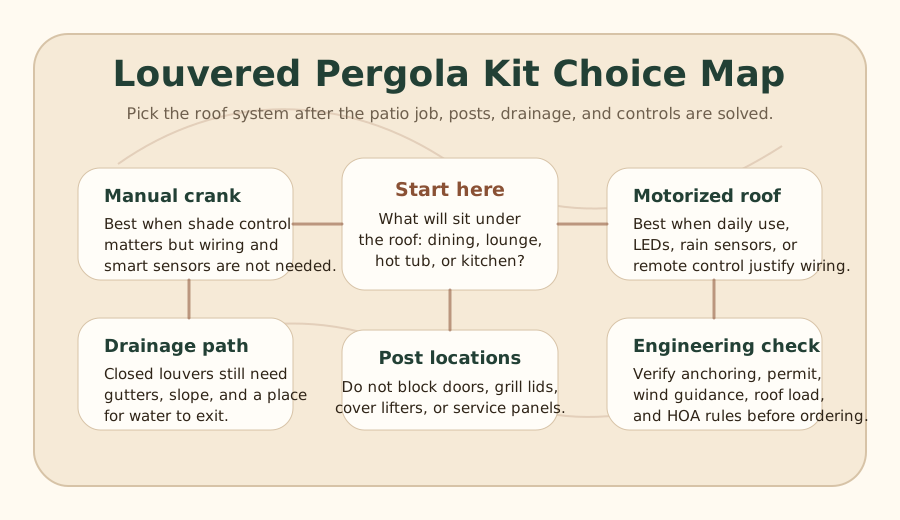
The best louvered pergola kit is the one that fits the patio footprint, leaves useful post locations, drains water away from the seating zone, can be anchored to the actual surface, and matches how often you will adjust the roof. Manual kits are simpler. Motorized kits are nicer when the roof will be opened and closed constantly or paired with lights and sensors.
Research links
Shopping starting points
Use these only after measuring the patio, checking post locations, deciding manual versus motorized controls, and confirming local permit or HOA rules.
Who should buy a louvered pergola kit?
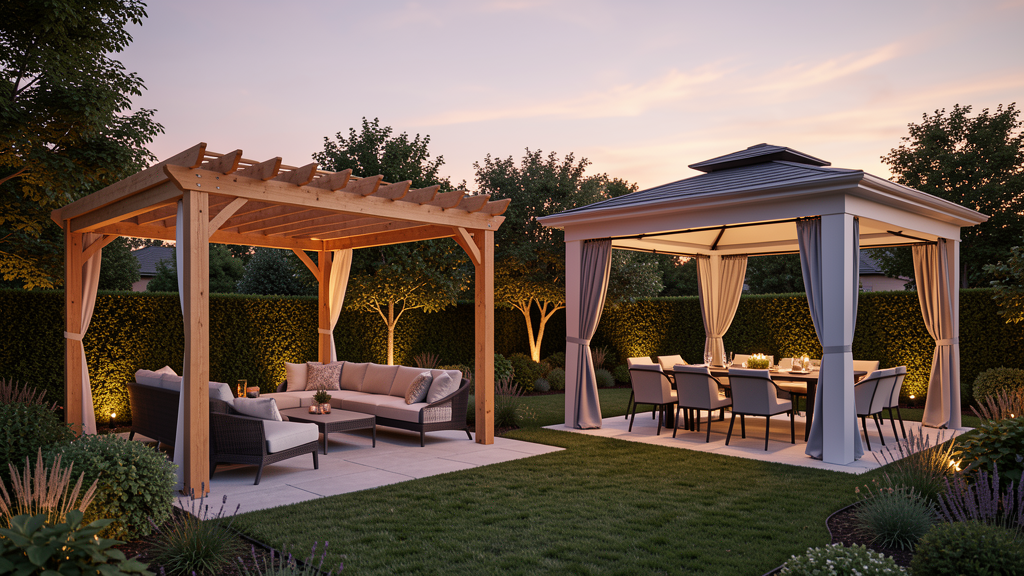
Buy a louvered pergola kit when a normal pergola feels too open but a gazebo or pavilion feels too heavy. The adjustable roof lets you tune sun and airflow during the day, then close the louvers when you want more shade or light rain control.
The fit is strongest over dining patios, lounge zones, grill-adjacent seating, poolside furniture, and hot tub areas where you still want air to move. It is weaker when you expect the structure to behave like a fully enclosed sunroom. Wind-driven rain, snow, leaves, pollen, and water runoff still need a plan.
If you are still deciding between a pergola and a gazebo, start with the pergola vs gazebo guide. If the structure is specifically going over a spa, read Can a Hot Tub Go Under a Pergola? before ordering anything.
Manual vs motorized louvered pergolas
Manual crank kits are better for simpler patios
A manual crank louvered pergola usually makes sense when the roof will be adjusted a few times per use, the structure is easy to reach, and you want fewer electrical parts outside. It is a good fit for dining patios, small lounge zones, and secondary seating areas where convenience matters but wiring does not.
The risk is friction. If the crank is awkward, the louvers are high, or the patio gets sun changes all afternoon, the roof may stay in one position because no one wants to bother with it. A manual kit is only simple if people will actually use the control.
Motorized kits are better for daily outdoor rooms
A motorized louvered pergola earns its keep when the patio is used often, the roof changes position throughout the day, or the project includes LED lights, remotes, wall controls, rain sensors, or smart controls. It also makes sense for larger roofs where manual movement would feel clunky.
The tradeoff is service complexity. Motors, remotes, sensors, lighting, and power supplies need protection, access, and replacement paths. If a motorized system fails, you want to know how the roof can be serviced and what parts are available.
Louvered pergola kit comparison
| Kit style | Best for | Avoid if | Check before buying |
|---|---|---|---|
| Manual freestanding kit | Simple patios, smaller lounge zones, poolside shade, and buyers who want fewer powered parts | The roof is large, hard to reach, or will be adjusted several times a day | Crank location, louver movement, anchoring hardware, gutter path, and assembly weight |
| Motorized freestanding kit | High-use patios, dining zones, outdoor rooms, and owners who want remote control or lighting | You do not have a protected power plan or do not want outdoor electrical service needs | Motor warranty, manual override, sensor behavior, power route, replacement parts, and service access |
| Wall-mounted louvered pergola | Patios tight to the house, outdoor dining off a kitchen door, and shade tied to indoor-outdoor flow | The house attachment, siding, drainage, doors, windows, or permits are unclear | Ledger details, roof runoff, wall flashing, setbacks, structural review, and door swing |
| Large multi-zone roof | Big entertaining patios, outdoor kitchens plus dining, and layouts where separate shade zones help | The patio lacks scale, the posts interrupt traffic, or the budget cannot handle pro installation | Independent louver zones, post spans, gutter routes, wind guidance, snow load language, and installer requirements |
Layout tests before buying
Test the posts against furniture, doors, and traffic
Post placement is where pretty product photos start lying. Tape the posts on the patio before you buy. Open the back door. Pull chairs out. Walk from the grill to the table. Carry a tray from the kitchen. Open a hot tub cover if the pergola is near a spa. If a post lands in the wrong place, the roof system is already the wrong size.
Also check sightlines from inside the house. A thick post in front of a kitchen window or patio door can make the whole yard feel blocked even if the structure fits on paper.
Decide where water goes when the louvers close
Closed louvers can help shed rain, but water still needs somewhere to go. Look for the gutter path, downspout location, patio slope, nearby drains, planting beds, and where runoff lands during a heavy storm. A louvered roof that dumps water beside the door, grill, hot tub steps, or lounge chairs is going to be annoying fast.
Make sure the roof has room to move
Louvers need clearance to rotate. Nearby tree limbs, eaves, string lights, fans, heaters, and hanging planters can interfere. If the kit includes lighting or sensors, check how those parts sit relative to the louver movement.
Plan the base like a structure, not a patio accessory
Do not assume pavers, a deck, or an old slab can handle the kit without review. Louvered pergolas are heavier and more mechanical than a basic shade frame. Verify anchoring requirements, surface condition, frost or wind exposure, and local rules before delivery day.
Best fit by backyard use case
Hot tub shade
A louvered pergola over a hot tub should keep steam moving, leave the cover lifter clear, protect service access, and avoid trapping moisture against the roof. Side privacy screens can help, but do not close the spa in so tightly that entry, air movement, and maintenance become a pain.
Outdoor kitchen cover
For outdoor kitchens, open louvers can help release heat and smoke while closed louvers give more shade or rain control. That does not replace grill clearance rules, appliance manuals, venting, fire-safe materials, or a real utility plan. Pair this with the outdoor kitchen cost guide if the pergola is part of a bigger build.
Dining patio
Dining patios are one of the cleanest fits because shade changes matter during long meals. Check chair movement, table size, lighting, and the path from indoor kitchen to table before sizing the roof.
Luxury lounge zone
For a lounge area, the kit should protect cushions from harsh sun, frame the furniture, and leave enough open side space for airflow. If the furniture plan is still unsettled, use the luxury patio furniture buying guide before locking in the pergola footprint.
Buyer risks that matter more than the product photo
Wind, snow, and roof-load language
Do not rely on a vague phrase like “weather resistant.” Look for the manufacturer’s wind guidance, anchoring instructions, roof-load language, and exclusions. If you live in a snowy, coastal, exposed, or high-wind area, slow down until the engineering language matches the property. Local code and installer advice matter more than a retailer bullet point.
Permit, HOA, and attachment rules
Permit needs vary by location, size, height, setbacks, attachment type, and roof coverage. A freestanding open shade frame may be treated differently than a wall-mounted adjustable roof. HOA rules can also control color, height, visibility, and placement. Check before buying, not after boxes show up.
Electrical and controls
Motorized roofs, lights, sensors, outlets, fans, and heaters bring outdoor electrical planning into the project. Use qualified help where wiring, wet-location fixtures, circuits, or local electrical rules apply. Also ask what happens during a power outage and whether the roof has a manual override.
Warranty and replacement parts
Ask what the warranty covers for frame finish, louvers, motors, sensors, remotes, lighting, fasteners, and corrosion. Then ask how replacement parts are ordered. The kit is a bad buy if the roof looks great for one season and becomes hard to service in year three.
Which louvered pergola should you choose?
| Choice | Best for | Avoid if | Decision trigger |
|---|---|---|---|
| Manual aluminum kit | Simple shade upgrades, lower-complexity patios, and owners who want fewer powered parts | You expect constant roof adjustments or want built-in lights and sensors | Choose this when the roof is reachable and the patio only needs adjustable shade. |
| Motorized aluminum kit | Daily-use outdoor rooms, dining patios, and larger roofs where easy control changes behavior | The power route, service access, or warranty support is vague | Choose this when convenience will make the patio get used more often. |
| Wall-mounted system | Patios directly off the house where shade, door access, and indoor-outdoor flow are linked | Attachment, flashing, drainage, or permit review is not solved | Choose this only after the house connection has been reviewed. |
| Pro-installed custom system | Large patios, outdoor kitchens, pool terraces, multi-zone roofs, and high-wind or snow regions | A standard kit already fits and local requirements are straightforward | Choose this when engineering, span, drainage, and finish quality matter more than kit savings. |
Pre-purchase checklist
- Measure the patio and tape the post corners before comparing products.
- Confirm the louver direction, crank or motor location, and roof-clearance needs.
- Map water runoff from gutters or downspouts when the louvers are closed.
- Check local permit, setback, HOA, wind, snow, and attachment rules.
- Verify anchoring requirements for your slab, pavers, deck, or footing plan.
- Ask for warranty terms on frame finish, louvers, motors, remotes, sensors, and corrosion.
- Confirm how replacement parts and service support work after the sale.
- For hot tubs, test cover movement, service access, steam escape, steps, and towel placement.
- For outdoor kitchens, check smoke path, grill clearance, lighting, outlets, and appliance manuals.
Final recommendation
For most backyards, the safest louvered pergola buy is a well-reviewed aluminum kit that fits the patio without awkward posts, has a clear drainage path, includes real anchoring instructions, and comes from a seller that can explain warranty and replacement parts without hand-waving.
Choose manual if the roof is small, reachable, and only needs occasional adjustment. Choose motorized if the patio is a daily-use outdoor room and the power, controls, service access, and warranty are clear. Skip any kit that looks beautiful but leaves you guessing on wind guidance, roof load, runoff, permits, or how the motor gets serviced later.
FAQ
Are louvered pergola kits worth it?
A louvered pergola kit can be worth it when you need adjustable shade, airflow, and light rain control over a patio that has the right base, anchoring, drainage path, and room for the louvers to operate.
Is a manual or motorized louvered pergola better?
Manual kits are usually better for simpler patios and lower maintenance. Motorized kits make sense when daily control, lighting, rain sensors, or remote operation are worth the wiring and service complexity.
Can a louvered pergola go over a hot tub?
Often yes, but the pergola should leave enough height, airflow, cover-lifter clearance, service access, non-slip entry space, and room for steam to escape. Always check the hot tub and pergola manufacturer guidance.
Do louvered pergolas need permits?
Permit rules vary by city, county, HOA, size, attachment type, roof coverage, setbacks, and local wind or snow requirements. Check local rules before ordering because a roofed or attached pergola can trigger more review than an open shade frame.