
Quick answer
The best outdoor sectional for a small patio is compact enough to leave a working lounge zone, not only a measured furniture footprint.
Start with a two-piece sofa-and-chaise, a compact L-shape, or a low-profile modular set. Then test the working space: door swing, traffic path, table reach, cushion drying, cover removal, delivery boxes, and the route to the grill, fire table, hot tub, or garden gate. If the sectional barely fits on paper, it will probably feel worse with people sitting in it.
Research links
Shopping starting points
Use these after you mark the full working footprint, choose the chaise side, and decide where cushions, covers, and loose pillows will go.
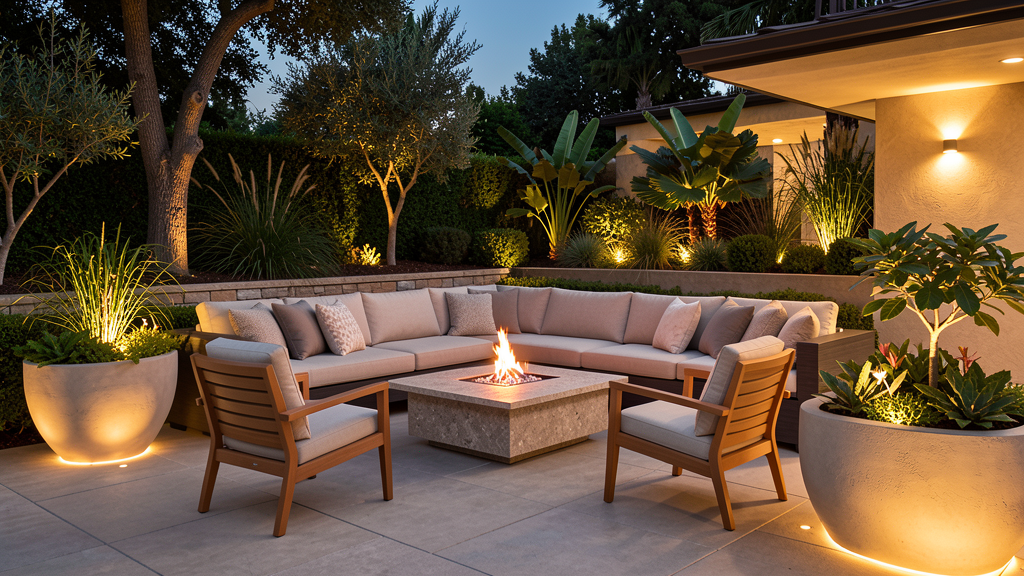
Small patio sectional shortlist
The best choice depends on how the patio is used. A reading corner needs a different sectional than a fire-table lounge or a compact hosting zone beside an outdoor kitchen.
Use this first filter before you compare brands, fabrics, or sale prices.
Best outdoor sectional types for small patios
| Sectional type | Best for | Avoid if | Decision trigger |
|---|---|---|---|
| Two-piece sofa and chaise | Relaxed patios where one person wants to stretch out and the long side can point away from traffic | The chaise would block the door, grill route, gate, or main view | Choose it when the patio has one obvious long side and the chaise direction is easy. |
| Compact L-shaped sectional | Corner patios, conversation nooks, and small lounge zones that need more seating than two chairs | The corner wedge wastes usable inches or traps guests behind a table | Choose it when the corner is already the natural lounge anchor. |
| Armless modular sectional | Flexible patios, renters, narrow layouts, and spaces that change between daily use and guests | You hate rearranging furniture or the modules slide apart easily | Choose it when flexibility matters more than a fixed showroom silhouette. |
| Loveseat with ottoman | Tiny patios that want sectional comfort without committing to a fixed chaise | You need seating for several adults every weekend | Choose it when an ottoman can become a chaise, table, or extra seat. |
| Low deep sectional | Covered patios and resort-style lounging where people stay put for long conversations | The patio needs upright seating for meals, older guests, or tight circulation | Choose it when lounge comfort outranks easy standing and walking space. |
| High-back conversation sectional | Windier patios, privacy needs, and cooler evenings where back support matters | The furniture would visually wall off a tiny patio | Choose it when comfort and privacy are worth the extra visual weight. |
Measure the working lounge zone, not the listing footprint
A sectional can fit inside the patio dimensions and still be the wrong purchase. The listing footprint is the static object. The working lounge zone includes people, knees, a coffee table, side tables, pillows, a cover, the path to the door, and the awkward moment when someone has to stand up with a drink.
Mark the sectional on the patio with tape or cardboard. Add the table. Add the ottoman or fire table if one is planned. Then walk the common routes: from the house to the seat, from the seat to the grill, from the seat to the hot tub, from the gate to the garden, and from the sectional to the storage box.
If the patio fails that test while empty, it will fail harder after cushions, guests, pets, planters, and a few throw pillows arrive.
Check the depth before the width
Small patio shoppers often obsess over length and forget depth. Deep lounge seating can feel incredible, but it pushes the whole seating line forward. A sofa that is only a little too deep can steal the walkway between the sectional and the table.
Seat depth also changes who enjoys the furniture. Lower, deeper sectionals can be great for lounging and terrible for guests who want to sit upright, eat snacks, or stand up without a little athletic event.
Choose the chaise side like it is permanent
Some sectionals are reversible. Some only look reversible in a lazy product listing. Verify the actual configuration before ordering.
The long side should point into dead space, a view, or a quiet edge. It should not cut across the door, crowd the grill, trap a fire table, block the gate, or force everyone to squeeze past the same corner. A wrong-side chaise is one of those mistakes that annoys you every time you use the patio.
Sectional shapes that behave in small patios
The corner L-shape is safest when the patio already has a corner job
An L-shaped sectional can make a small patio feel finished because it anchors two edges at once. It works best when one corner is already the lounge zone and there is still open floor in front of it.
The trap is the wedge. Some corner pieces look generous but waste usable seat space. Others create a diagonal dead zone where a table cannot sit cleanly. Compare the actual corner module, not only the total seating count.
The sofa-and-chaise setup is better for daily lounging than group hosting
A chaise is great for one or two people who use the patio every day. Coffee, reading, pool towels, and post-sauna cooldown all make sense there.
For groups, a fixed chaise can be less efficient than it looks. One person gets the lounge spot while others sit around it. If the patio hosts more often than it naps, a loveseat, two chairs, and a movable ottoman may beat a sectional that takes over the floor.
Modular pieces are only useful if they lock together and move well
Modular sectionals sound perfect for small patios because they promise flexibility. They can be perfect. They can also become a group of lightweight cubes migrating across slick pavers.
Check clips, feet, weight, cushion ties, and how each module behaves on your surface. If the patio has smooth tile, composite decking, or slightly sloped pavers, drifting modules can make the furniture feel cheap even when it was not cheap.
A loveseat plus ottoman is the underrated small-patio cheat code
When the patio is genuinely tight, do not force a sectional just because the search term says sectional. A loveseat and ottoman can act like a chaise when one person is lounging, then separate when guests need an extra seat or a clear path.
This setup is also easier to cover, rearrange, store, and carry through a narrow gate. It gives up the built-in sectional look, but it often wins daily use.
Materials, cushions, and weather care
Outdoor sectionals are cushion machines. That is the point, and also the ownership problem. Before falling for a thick, resort-style set, decide how those cushions dry, where they go during storms, and how replacement cushions will be handled later.
Outdoor sectional material guide
| Material path | Best for | Watch-outs |
|---|---|---|
| Powder-coated aluminum frame | Modern patios, easier movement, lower maintenance, and covered or uncovered lounge zones | Light frames may shift in wind; inspect welds, finish, feet, and cushion attachment. |
| Teak frame | Warm premium patios, poolside lounges, and homeowners who like heavier furniture | Accept weathering or plan cleaning and sealer decisions; teak weight can be annoying in tight patios. |
| Resin wicker over metal frame | Traditional patios, softer texture, and cushion-heavy conversation setups | Check the underlying frame, weave quality, UV exposure, sagging risk, and replacement cushions. |
| HDPE or recycled-plastic frame | Wet areas, pool patios, families, and lower-fuss outdoor routines | Can look chunky; check heat in direct sun, weight, cushion comfort, and module dimensions. |
| Rope or strap seating | Designer patios, covered spaces, and lighter resort styling | Verify cleaning instructions, UV exposure, frame quality, and whether the look holds up after real use. |
| Steel frame | Heavier feel, windy patios, and budget sets that need more stability | Rust risk depends on finish, scratches, drainage, feet, and care. Do not ignore warranty exclusions. |
Cushion fabric is not a permission slip to neglect the set
Performance fabric helps, but it does not make an outdoor sectional maintenance-free. Sunbrella's upholstery cleaning guidance includes mold and mildew cleaning instructions and recommends air drying after cleaning. That is the boring lesson: outdoor fabric still needs dirt control, drying time, and a care routine.
If the sectional sits uncovered under trees, beside a pool, or in a pollen-heavy yard, cushions will demand attention. The best set is the one you will actually keep clean, dry, and usable.
Quick-dry claims need context
Some brands use quick-drying cushion fills or outdoor performance fabrics. POLYWOOD's FAQ, for example, describes outdoor cushions made with performance fabric and quick-drying polyester fiber. Useful, yes. Magic, no.
Quick-dry cushions still need air, sun or ventilation, drainage, and a place where water is not trapped under a cover. Thick cushions packed tight against a wall can stay damp longer than expected.
Teak looks better when you are honest about weathering
Teak can make a small patio feel warm and grown-up. It also changes outdoors. Country Casual Teak's care guidance notes that untreated outdoor teak changes to a silvery gray under sun and rain. That can be beautiful if you expect it. It can be frustrating if you bought golden wood and thought it would stay that way without care.
For small patios, also think about weight. Heavy teak frames feel stable and premium, but moving them for cleaning, covers, or winter storage is not fun in a narrow side yard.
Buyer risks that matter with small patio sectionals
1. The coffee table makes the sectional unusable
Small patios often fail after the table arrives. The sectional fits. The coffee table fits. Together, they leave no knee room and no way to stand up gracefully.
Use a slim table, nested side tables, a C-table, or a fire table only after testing the seating gap. If drinks need a landing spot, add smaller surfaces beside seats instead of forcing one big table into the middle.
2. The cover is harder to use than the furniture
A giant one-piece sectional cover can be awkward in a tight patio. It needs room to pull off, fold, dry, and store. If removing the cover is a wrestling match, you will stop using it or stop using the sectional.
Check fitted cover options, separate module covers, elastic or strap design, venting, and where the cover lives while people sit. Cover storage is part of the furniture plan, not an accessory afterthought.
3. Replacement cushions are vague or impossible
Small patio sectionals live hard lives: sun, rain, pollen, food, sunscreen, pets, kids, and guests who sit on the back cushion like chaos gremlins. Replacement cushions matter.
Before buying, look for replacement cushion availability, cover dimensions, zipper quality, tie-downs, and customer support. A cheap sectional with weird cushion sizes can become expensive trash when one seat cushion fails.
4. The sectional blocks another backyard zone
A patio sectional can collide with the rest of the yard. It can crowd the grill. It can block access to an outdoor kitchen. It can squeeze the walking path to a hot tub or fire pit. It can take the only good spot for a dining set.
If the patio also handles cooking, start with the outdoor kitchen guide hub. If the sectional sits near flame, compare the propane fire pit table guide before placing cushions around heat and traffic.
5. Delivery access gets ignored
Outdoor sectionals arrive in large boxes, sometimes several of them. Small patios often come with narrow gates, tight side yards, steps, balconies, condo elevators, or awkward turns behind the garage.
Check boxed dimensions, assembly needs, return rules, and the route from curb to patio. A sectional that cannot make the turn is not a furniture purchase. It is a logistics prank.
Pre-order checklist for a small patio sectional
| Check | Why it matters | Proof to collect |
|---|---|---|
| Working footprint | The sectional has to fit with people, table, pillows, and walking paths | Tape layout, module dimensions, table size, and route sketch |
| Chaise direction | The long side can either relax the patio or block it | Left/right/reversible confirmation from the product page or manual |
| Cushion routine | Thick cushions need drying, cleaning, and storage | Fabric details, fill type, care page, ties, zippers, and storage plan |
| Cover fit | A hard-to-use cover gets abandoned | Fitted cover dimensions, venting, straps, storage spot, and removal path |
| Module stability | Light modules can drift and feel cheap | Clips, feet, weight, surface notes, and customer-support details |
| Replacement parts | Cushions and hardware decide long-term value | Parts page, cushion availability, warranty terms, and seller documentation |
| Delivery access | Large boxes can fail before the patio sees furniture | Boxed dimensions, gate width, stair path, assembly plan, and return policy |
What to pair with a small patio sectional
Use side tables when a coffee table crowds the middle
A coffee table is not mandatory. Two compact side tables can work better because they keep the center open for feet, pets, and people standing up. This is especially useful when the sectional faces a view, fire feature, or hot tub path.
Add shade only after the seating shape is settled
Umbrellas, pergolas, shade sails, and gazebos all interact with sectional placement. An umbrella base can eat floor space. A pergola post can collide with a chaise. Curtains can make a small patio feel private or boxed in.
If shade is a major part of the plan, use the pergola vs gazebo guide before locking in a sectional that leaves no room for posts, curtains, or roof drainage.
Keep dining separate unless the patio is built for hybrid use
Sectionals are great for drinks, reading, fire tables, and cooldown seating. They are usually less ideal for meals. If the patio needs real dining, compare the small patio dining set guide before forcing guests to eat from a low lounge table.
Source notes used for this guide
This guide avoids exact prices, warranty claims, cushion specs, fabric rankings, and clearance numbers because those details change by brand and retailer. The buyer advice is based on OLL's patio furniture cluster scan plus direct manufacturer-style care checks.
Useful source context checked during drafting: Sunbrella upholstery cleaning guidance for cushion cleaning and air-drying reminders, POLYWOOD FAQ for HDPE/recycled-plastic and outdoor cushion context, and Country Casual Teak care guidance for teak weathering and cleaning context. Verify each sectional's own care instructions, outdoor-use limits, replacement parts, warranty, return policy, and delivery dimensions before ordering.
Final decision: which outdoor sectional should you buy for a small patio?
Buy the sectional that leaves the patio calm after the furniture is in place. For most small patios, that means a compact L-shape in a real corner, a sofa-and-chaise with the long side pointing away from traffic, or a loveseat-and-ottoman setup that acts like a sectional without trapping the floor.
If two sectionals are close, choose the one with shallower depth, clearer chaise orientation, better cushion documentation, available covers, replacement cushion support, and delivery details you can actually verify. Skip the bigger set if it forces the table too close, blocks the door, crowds the grill path, or leaves no place to dry cushions.
The right sectional should make the patio feel easier to use on a random Tuesday evening. Sit down, set a drink somewhere, pull the cover without cursing, walk to the door without stepping sideways, and still have room for the rest of the backyard. That is the win.
FAQ
What type of outdoor sectional is best for a small patio?
A compact L-shaped sectional, two-piece sofa-and-chaise, or armless modular sectional is usually the easiest fit. The best choice leaves room for door swing, walking paths, a table, cushion care, and cover movement.
Is a chaise sectional a good idea on a small patio?
A chaise can work if the long side points away from the main path and does not block a door, grill route, gate, or view. If the patio needs flexible seating, separate lounge chairs or an ottoman may be easier than a fixed chaise.
What material should I choose for an outdoor sectional?
Powder-coated aluminum is often practical for lower-maintenance modern sectionals, teak feels warmer and heavier, resin wicker can soften the look, and HDPE or recycled-plastic frames can make sense in wet or poolside areas. Verify the exact frame, fabric, cushion fill, care instructions, and replacement cushion options before buying.
Do outdoor sectionals need covers?
Most outdoor sectionals benefit from a fitted cover or a clear off-season plan. Covers help with sun, rain, pollen, leaves, bird mess, and cushion drying, but they only help if they fit well and have somewhere to live while the sectional is in use.
How do I know if a sectional is too big for my patio?
A sectional is too big if guests cannot stand up without stepping around cushions, the coffee table blocks knees, the patio door or gate is crowded, the cover cannot be removed easily, or one module turns into a storage obstacle. Tape the full working zone before ordering.