
Quick answer
The best propane fire pit table fits the furniture layout before it impresses anyone with flame height.
Pick the table around chair clearance, tank access, surface material, wind, cover storage, ignition reliability, and the way people set down drinks. A lower lounge table can be perfect for deep seating. A dining-height fire table can work for meals. A narrow rectangle usually fits modern sofas better than a big square jammed into a tight patio.
Research links
Shopping starting points
Use these after you measure the patio, sketch the seating circle, and confirm that the manual allows your intended outdoor surface and clearance plan.
Start with the patio job
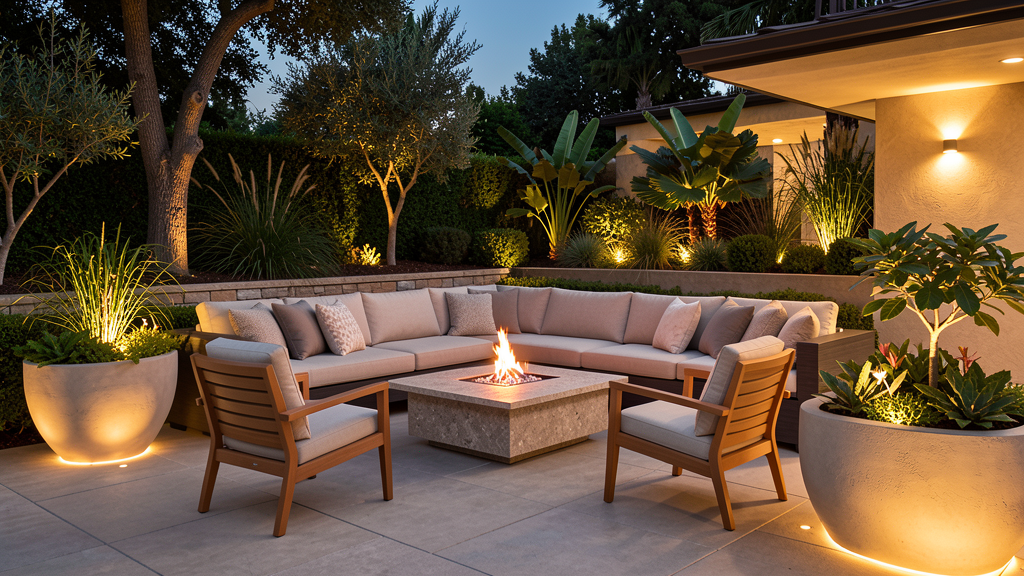
Do not start with the prettiest lifestyle photo. Start with the job the table has to do. Is this a coffee table for a sectional, a conversation anchor for four lounge chairs, a dining table with a burner strip, or a flexible piece that moves between guests and quiet nights?
That answer controls shape. Rectangular fire tables usually pair well with outdoor sofas because the flame runs with the seating. Square tables can work with four chairs, but they eat more floor area. Round tables soften a compact patio, though they may offer less usable landing space for glasses, plates, and a tray.
The table also needs a non-annoying routine. If the propane door opens into a chair, the burner cover has nowhere to go, the wind keeps pushing flame sideways, or the table is too hot for snacks once lit, the setup will get used less than expected.
Propane fire pit table types worth comparing
Low lounge fire table
This is the patio-coffee-table version. It works best with sectionals, deep lounge chairs, and resort-style seating where people stay for drinks, conversation, and cool evenings. The table should be close enough to feel useful but not so close that knees, cushions, and traffic crowd the burner.
Pay close attention to the burner cover. A flush cover turns the table into more usable furniture when the flame is off. A flimsy cover that has to be stored across the patio becomes one more little chore that makes the space feel fussy.
Dining-height fire table
A dining-height fire table can be a strong choice when the patio has one main table and no room for a separate lounge zone. It gives you a gathering point for dinner, dessert, and colder nights.
The tradeoff is table function. A burner in the middle steals serving space, and some guests will not love eating around heat. Check how much flat surface remains when the burner is exposed and whether the cover creates a stable tabletop when the flame is off.
Rectangular sofa fire table
For modern patios, this is often the cleanest fit. A long rectangle can sit parallel to a sofa, keep the flame centered in the conversation zone, and leave clearer walking lanes than a bulky square table.
Watch the width. A narrow table can look elegant but become useless for plates. A wide table can push chairs too far apart. The best version gives each seated person a real landing zone without forcing anyone to lean over the burner.
Tank-hidden side cabinet or remote tank setup
Some designs hide the propane tank inside the table base. Others use a side cabinet or a remote tank connection. Hidden tanks look cleaner, but the door, hose, ventilation, and replacement routine matter. Remote tanks can free up table design, but they add hose routing and trip-path questions.
Either way, do not treat the tank as an afterthought. If swapping propane feels awkward, the fire table becomes decoration with a subscription to annoyance.
Propane fire pit table comparison
| Fire table style | Best for | Avoid if | Decision trigger |
|---|---|---|---|
| Low lounge table | Sectionals, deep chairs, relaxed drinks, and conversation zones | You need a true dining surface or tall chairs | Choose this when the fire feature is part of a lounge setup, not the main meal table. |
| Dining-height fire table | Small patios where one table has to handle meals and evening warmth | You serve large meals often or guests dislike heat near plates | Choose this when floor space is tight and the burner cover creates a stable full table. |
| Long rectangular table | Outdoor sofas, linear patios, modern furniture, and clearer walking lanes | Your seating is mostly four separate chairs around a compact square area | Choose this when the table needs to follow the sofa and keep the flame out of traffic. |
| Round or square table | Four-chair conversation groups and symmetrical patios | The table footprint blocks paths or makes chairs sit too close to heat | Choose this when the furniture circle has enough breathing room on all sides. |
| Remote-tank design | Cleaner table bases, narrow designs, and patios with a discreet tank location | The hose would cross a walkway or create an ugly exposed route | Choose this when the tank can be hidden safely without tripping guests or blocking service. |
Clearance, tank access, and surface checks
Measure the seating area with chairs pulled back
Fire tables often look smaller online than they feel on a patio. Measure the table, then measure chairs in their real pulled-back position. Add room for people to walk behind the chair line with a drink in hand. If every path squeezes past flame, cushions, or a propane door, the table is too large for that spot.
Also map the burner location. Guests should not have to reach over flame for snacks, and throw pillows should not sit close to heat. If kids or pets use the space, leave more room than the product photo suggests.
Tank access should face the service side
A hidden tank is only useful if you can open the door easily. Put the tank door toward the side where you naturally service the patio, not toward the main chair, sofa, wall, railing, or planter. Check whether the tank slides out, lifts out, or needs a weird angle to clear the frame.
Look for a practical shutoff routine too. You should be able to turn off the gas, inspect the hose, change the tank, and close the door without dragging furniture around like you are rearranging the patio for a hostage negotiation.
Use the manual for surface and clearance rules
Patio materials vary: concrete, pavers, stone, tile, composite decking, wood decking, turf, and covered patios all change the question. Do not assume a fire table belongs on every surface. Read the current manual for the exact model and verify outdoor-only use, required clearances, acceptable surfaces, ventilation, and overhead restrictions.
If the patio is covered, partially enclosed, or close to railings, siding, pergola curtains, cushions, planters, or dry landscaping, slow down. A gas flame in a pretty table still needs air, spacing, and common sense.
Pre-order checklist for a propane fire pit table
| Check | Why it matters | Proof to collect |
|---|---|---|
| Real footprint | The table must fit with chairs pulled out and walking paths open | Table dimensions, chair depth, patio sketch, and traffic path |
| Tank access | Propane changes should not require moving half the furniture | Door direction, tank compartment dimensions, hose route, and shutoff location |
| Manual clearances | Fire tables have model-specific rules for surfaces and nearby materials | Current owner manual and local fire-rule check |
| Burner cover | The table needs a usable surface when the flame is off | Included cover details, storage spot, and tabletop stability |
| Wind behavior | Cross-breezes can make flame uneven or annoying | Patio wind notes and model-compatible wind guard options |
| Safety listing | Gas appliances should have clear testing/listing information for your market | Product listing, manual, certification marks, and seller documentation |
| Replacement parts | Igniters, glass, covers, burners, and hoses may need service later | Parts page, warranty language, and customer-support path |
Materials and weather exposure
Frame material has to match the patio climate
Powder-coated aluminum can be easier to move and maintain. Steel may feel sturdy but needs a serious finish and rust plan. Concrete-look tops can be gorgeous but heavy. Wicker bases can blend with lounge furniture, but cheap woven panels can age badly in sun and rain.
Do not judge the table by the top alone. Look at the burner pan, fasteners, tank compartment, leveling feet, door hardware, ignition cover, and drainage details. Those parts decide whether the table still feels premium after storms, pollen, guests, and a season of being shoved by chairs.
The burner media changes maintenance
Fire glass can look clean and modern. Lava rock can feel more casual. Ceramic logs can soften the look if the table is trying to mimic a small fireplace. None of these fix a bad layout. They also need to be compatible with the burner and arranged according to the manual.
If the burner media spills easily, catches debris, or makes the cover awkward, the table will look messy fast. Ask the boring question: how does this thing look on a Tuesday morning after rain?
Wind guards are useful only when they fit the model
A glass wind guard can help keep the flame more stable on breezy patios and can make the burner area feel more protected. It should be compatible with the table, sized to the burner, and easy to remove or clean.
Do not use a wind guard as an excuse to place the table where wind, overhead cover, or crowding already make the setup questionable. It is an accessory, not a permission slip.
Buyer risks that make fire tables annoying
The table is too big for the seating zone
The most common fire table regret is scale. A giant square table can make an expensive patio feel like a furniture showroom jammed into a corner. If chairs cannot move, the tank door cannot open, or guests have to sidestep heat to leave the sofa, go smaller.
The flat surface disappears when the flame is on
Some tables look useful until the burner is exposed. Then there is nowhere for a cheese board, glasses, phone, book, or tray. If the table is meant to replace a coffee table, verify how much usable surface remains in both modes.
The ignition and tank routine feels cheap
A pretty table with a fussy igniter or miserable tank access feels low-end quickly. Look for a clear lighting routine, protected controls, reachable shutoff, easy tank swaps, and replacement parts. A fire feature that only works after five tries kills the mood faster than bad playlist choices.
The table has no cover plan
Outdoor-rated does not mean neglect-rated. Rain, pollen, leaves, insects, pool splash, sun, snow, and freeze cycles can punish the burner area and table finish. A fitted cover, drainage awareness, and off-season plan should be part of the purchase.
Propane fire table vs smokeless wood fire pit
A propane fire pit table is the cleaner hosting choice when you want fast startup, less ash, no wood rack, no ember cleanup, and a usable tabletop. It fits patios where people want drinks, blankets, appetizers, and easy shutdown after guests leave.
A smokeless wood fire pit wins when you want more campfire feel, stronger flame character, and a dedicated fire zone away from dining surfaces. It also asks more from the yard: fuel storage, ash disposal, surface protection, smoke direction, and a cool-down routine.
If the patio already has a premium sectional or dining setup, propane often integrates more cleanly. If the yard has a gravel or paver fire circle away from the house, wood may feel more natural. The smarter choice is the one that fits the zone, not the one with the most dramatic product photo.
Quick scorecard: is a propane fire pit table right for your patio?
| Question | Good sign | Warning sign |
|---|---|---|
| Can chairs move naturally around it? | Guests can stand, sit, and walk without crowding heat | Chair backs, knees, or walking lanes fight the table |
| Can you reach the tank and controls? | The service side opens without moving the main seating | The tank door points at a sofa, wall, railing, or planter |
| Does it still work as a table? | The burner cover creates a useful flat surface when off | The fire feature eats the whole tabletop |
| Does the patio handle wind? | The flame area is protected enough for normal use | Cross-breezes would push flame toward guests or cushions |
| Is the ownership routine easy? | Cover, tank swaps, ignition, cleaning, and storage are obvious | Every use requires dragging parts around |
Source notes used for this guide
This guide uses manufacturer-manual-first buying logic because propane fire pit table requirements vary by model. For general outdoor gas fire context, NFPA grill safety guidance was checked for practical reminders: keep grills well away from homes, deck railings, eaves, and overhanging branches; check propane tanks for leaks before seasonal use; keep children and pets at least three feet from the grilling area; and never leave active equipment unattended.
A fire pit table is not the same product as a grill, so use those NFPA points as broad gas-flame safety context. For the actual fire table, follow the current manual, local rules, and the seller or manufacturer's documentation for clearance, surface, tank, and outdoor-use requirements.
Final decision: which propane fire pit table should you buy?
Buy the propane fire pit table that makes the patio easier to use, not the one that looks largest in a listing photo. For a sectional, a low rectangular table with a flush burner cover is usually the cleanest fit. For a tiny patio, a dining-height model can earn its space if the cover creates a stable full table. For four lounge chairs, a round or square table can work if the chair circle has enough room.
If two models are close, choose the one with better tank access, clearer manual documentation, stronger cover plan, easier replacement parts, and a shape that leaves more walking room. Heat output matters, but it should not outrank patio fit, flame control, material quality, or the ability to shut everything down without moving furniture.
Skip any table if the listing hides the manual, the safety listing is vague, the tank door is awkward, the burner cover looks flimsy, or your intended spot is under questionable cover or too close to cushions, siding, railings, dry plants, or heavy foot traffic. The boring checks are the purchase. The flame is just the reward.
FAQ
What is the best propane fire pit table for a patio?
The best propane fire pit table is the one that fits the seating layout, leaves safe walking room, gives easy tank access, has a clear burner cover plan, and matches the patio material and wind exposure. Do not choose by heat output alone.
Are propane fire pit tables safe on patios?
They can be appropriate on many outdoor patios when used exactly as the manufacturer allows. Verify outdoor-only use, clearances, surface requirements, tank handling, ventilation, safety listing, and local fire rules before buying.
Should I buy a propane fire pit table or a smokeless wood fire pit?
Choose propane when you want cleaner startup, no wood storage, less ash cleanup, and a table surface for drinks. Choose a smokeless wood fire pit when you want a stronger campfire feel and are willing to manage fuel, embers, ash, and surface protection.
What should I check before ordering a propane fire pit table?
Check table dimensions, seating clearance, tank door access, burner cover, ignition type, safety listing, wind behavior, frame and top material, cover fit, replacement parts, warranty terms, local rules, and whether the manual allows your intended patio surface.