
Quick answer
The best smokeless fire pit depends on patio material, seating distance, and how often you want to move it.
Smokeless fire pits can make backyard hosting cleaner, but they still need clearance, a safe surface, ash handling, and seating that does not crowd the heat. Choose portable steel for flexibility or a heavier setup for a permanent lounge zone.
Research links
Shopping starting points
Start here once you know the seating circle, safe surface, wood-storage spot, and clearance rules for your patio.

What to decide first
Start with the number of people you actually host. A tiny fire pit is easy to store but can feel underwhelming with a group. A large fire pit feels impressive but needs more clearance, more fuel, and a bigger seating zone.
Then choose the surface: pavers, gravel, stone, concrete, or a manufacturer-approved stand on a compatible patio. Do not assume every deck or patio surface is safe without checking the product requirements.
Why smokeless fire pits work well for hosting
Smokeless designs can reduce the constant chair-shuffling smoke dance, which makes the space more usable for guests. They also tend to look cleaner and more intentional than a random metal bowl in the yard.
They still produce heat, ash, and live fire. The setup needs safe spacing, wind awareness, a place for tools, and a plan for cooling and storage after use.
Best layout rules
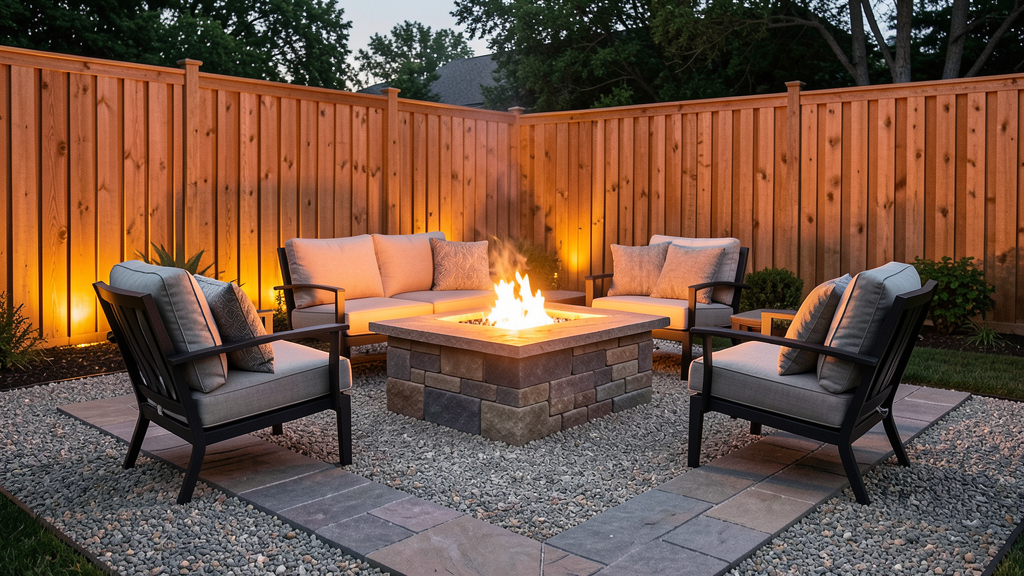
Create a dedicated fire zone instead of dropping the pit into leftover space. Put chairs far enough back for comfort, leave a path for people carrying drinks, and avoid placing the fire where smoke or heat fights the house, fence, plants, or overhead structures.
A circular or U-shaped seating plan usually works best. Add side tables so guests are not balancing glasses on chair arms like maniacs.
Accessories worth planning for
A cover keeps the fire pit looking better. A stand or heat shield may be required for certain surfaces. Tools, gloves, wood storage, and a nearby ash plan make the difference between a fun feature and a messy chore.
If the fire pit is part of a luxury backyard, style the zone around it: gravel border, low planting, warm path lights, outdoor pillows, and furniture with enough weight to feel permanent.
Smokeless fire pit buyer framework
Smokeless does not mean no planning
Smokeless fire pits can reduce smoke when used correctly, but they still produce heat, ash, embers, and clearance requirements. The setup needs a safe surface, comfortable seating distance, wind awareness, and a place to store fuel and accessories. Treat the fire pit as a zone, not a portable accessory you randomly place anywhere.
Choose portable or permanent first
Portable stainless fire pits are best for flexible seating, smaller patios, and people who want to move the setup seasonally. Heavier fire bowls or built-in fire areas feel more permanent and can anchor a lounge zone, but they need more planning around surface protection, drainage, and furniture layout.
The best setup is usually a circle with escape paths
Fire pit seating should invite conversation without trapping people. Leave enough space for chairs to slide back, people to walk around, and kids or pets to avoid crowding the heat. If the fire pit sits near a hot tub, sauna, outdoor kitchen, or wood deck, check clearances carefully.
Smokeless fire pit comparison
| Type | Best for | Watch-outs |
|---|---|---|
| Portable stainless pit | Flexible patios and renters/homeowners who rearrange often | Needs safe surface, ash management, cover, and dry storage. |
| Large freestanding fire bowl | Permanent lounge zones and bigger backyards | Heavier, harder to move, and can dominate small spaces. |
| Built-in fire area | High-end landscape designs | Requires stronger planning, local rules, drainage, and seating layout. |
| Tabletop fire feature | Small patios and ambience | Not a replacement for a real heat/fire gathering zone. |
What to check before buying
Fuel and cleanup matter
Wood storage, ash disposal, starter tools, gloves, covers, and a safe cool-down routine are part of the ownership experience. If cleanup feels annoying, the fire pit will not get used as often as the product photos suggest.
Match the fire pit to the furniture
Low lounge chairs, Adirondack chairs, and modular sectionals all create different distances from the flame. Decide the seating first or at least measure it before choosing the fire pit diameter.
Fire pit zone planning
Surface first
Before choosing a fire pit, decide where it can safely sit. Concrete, stone, pavers, gravel, and properly protected patios are easier to plan around than wood decks or tight corners. Always follow the manufacturer’s surface and clearance requirements, especially around overhead covers, fences, furniture, and dry landscaping.
Seating distance changes everything
A fire pit that is too large for the seating circle can make guests sit too far away. A fire pit that is too small may look like a prop in a large yard. Measure chair depth, walkways, and where people will set drinks. Leave room for people to enter and leave the circle without stepping too close to heat.
Storage and cleanup decide usage
Plan where wood, pellets, covers, pokers, gloves, ash tools, and fire starters will live. If those items are scattered in a garage, the fire pit becomes a production. A small storage bench or deck box near the zone can make the setup feel much easier to use.
Planning summary
A smokeless fire pit is best when it sits on a safe surface, has enough seating clearance, includes an ash and fuel-storage plan, and matches the size of the lounge zone.
How to make the final decision
Plan the heat zone before picking the pit
A smokeless fire pit still needs clear air around it. Lay out the seating circle, walking path, wood storage, ash handling, and wind direction before comparing brands. If chairs have to crowd the flame, the pit is too large for the space.
Portable stainless pits are great when you want flexibility and easier storage. Larger fire bowls feel more permanent, but they need a serious surface plan and enough room for people to move without brushing past heat.
Check the manufacturer’s clearance rules for decks, overhead covers, fences, turf, pavers, and heat shields. Also look at ash cleanup, cover quality, spark control, and whether accessories are proprietary or easy to replace.
Final buying rule
Pick the fire pit that fits the seating circle safely. The best one is not the biggest flame; it is the one people can gather around without smoke, crowding, or a cleanup routine you dread.
Final recommendation
Choose the fire pit around the seating circle, surface, and cleanup routine. A safer, easier-to-use fire zone beats a giant pit that takes over the patio.
FAQ
Are smokeless fire pits actually smokeless?
They can reduce smoke significantly when used correctly with dry fuel, but no wood fire is literally smoke-free in every condition.
Can a smokeless fire pit go on a deck?
Only if the manufacturer allows it and you use the required stand or heat protection. Always check surface and clearance requirements first.
What size fire pit is best for a backyard?
Choose based on seating count, patio size, storage, and fuel use. Bigger is not always better in a compact yard.