
Quick answer
The best built-in outdoor grill is the one your island can safely own for years.
Choose by installation fit before cooking features: exact cutout, gas type, ventilation, non-combustible or protected enclosure, grease tray access, lid swing, counter landing space, cover plan, and the ability to service the grill without tearing apart the kitchen.
Research links
Shopping starting points
Use these after you have measured the island, confirmed the fuel plan, and read the installation manual for any grill you are considering.
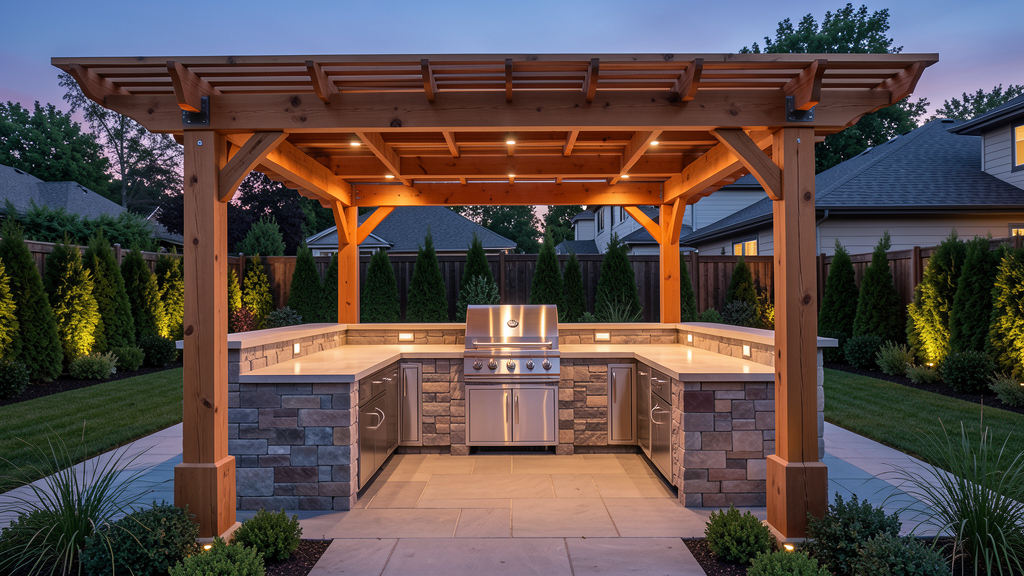
Start with the island, not the grill photo
Most built-in grill mistakes happen before the grill arrives. A homeowner finds a good-looking grill, buys the size that feels impressive, then discovers the island cutout, gas line, vents, doors, counters, or cover plan do not match the appliance.
Flip the order. Sketch the outdoor kitchen first. Mark the cooking face, guest path, counter landing space, trash location, storage, light source, shade, prevailing wind, and the route back to the indoor kitchen. Then choose the grill that fits that plan.
The grill needs room to breathe and room to be maintained. You should be able to open the lid without hitting a wall or pergola post, slide out the grease tray, reach the gas shutoff, remove grates, replace parts, clean around the appliance, and cover it when the kitchen is not in use.
Built-in grill types worth comparing
Built-in gas grill
This is the default choice for many outdoor kitchens because it fits permanent islands well and can support weeknight cooking, hosting, and faster heat control. The big decision is propane versus natural gas, and that decision should be made before the island is built.
Natural gas can be convenient for a permanent kitchen, but the line route, shutoff, permits, appliance compatibility, and qualified installation matter. Propane can be simpler in some yards, but the tank storage, access door, replacement routine, and local safety rules still need a home in the design.
Hybrid grill with infrared or sear burner
Some built-in grills add an infrared sear burner, rear burner, rotisserie setup, smoker tray, or more zone control. These upgrades are worth considering if you actually cook steaks, skewers, roasts, vegetables, or larger meals outside.
Do not pay for specialty burners to compensate for a bad layout. A grill with stronger features still needs usable counter space beside it, safe lighting after dark, and a cleaning path that does not feel like a chore.
Built-in charcoal, kamado, or pellet unit
These can make sense for buyers who care more about flavor style than speed. The catch is integration. Ash, pellets, charcoal storage, smoke direction, heat, and cleaning all need more planning than a simple product card suggests.
If a covered patio, low roof, tight fence line, or close seating area is involved, slow down and verify manufacturer instructions and local rules. Smoke and heat behave differently once a grill is locked into a permanent island.
Freestanding grill placed near a finished counter
This is not a built-in grill, but it deserves a mention because it can be the smarter move for a first outdoor kitchen. A freestanding grill beside a counter run lets you test the cooking spot before cutting a permanent opening.
Choose this path if the budget is still moving, the patio may change, or you are not sure how often the kitchen will be used. Permanent can wait until the layout proves itself.
Built-in outdoor grill comparison
| Grill path | Best for | Avoid if | Decision trigger |
|---|---|---|---|
| Built-in gas grill | Permanent outdoor kitchens, frequent hosting, quick heat control, and clean island designs | The gas route, cutout, ventilation, or service access is unresolved | Choose this when the island dimensions and fuel plan are already nailed down. |
| Gas grill with sear or rear burner | Buyers who cook varied meals outside and want more heat-zone control | You mainly grill burgers and dogs, or the island lacks counter space and lighting | Choose this when the extra burner will be used often enough to justify the price and cleaning. |
| Built-in charcoal, kamado, or pellet setup | Flavor-focused cooking, smoking, and slower weekend meals | Smoke, ash, pellet storage, or covered-patio ventilation is hard to manage | Choose this when the kitchen has a clear smoke path and a practical cleanup routine. |
| Freestanding grill plus counter | Testing a layout, lower commitment, changing patios, and phased backyard builds | You want a fully integrated permanent island right now | Choose this when flexibility beats a cutout you may regret later. |
Cutout, fuel, and ventilation checks
Cutout dimensions control everything
Every built-in grill has model-specific cutout dimensions. Do not estimate from the cooking surface size or the product name. Get the current installation manual, confirm width, depth, height, rear spacing, side spacing, counter overhang, support ledges, and any required access below the appliance.
If a contractor is building the island, send the exact manual before framing starts. If you are comparing modular kitchen kits, confirm that the kit opening matches the grill model, not only the rough grill width. A 32-inch category label is not a cutout drawing.
Combustible enclosures need special caution
Many outdoor kitchens use stone, block, metal, or other non-combustible materials around the grill. If wood framing, composite panels, or another combustible material is part of the island, verify the grill manufacturer's enclosure requirements before ordering. Some setups may require a model-specific insulated jacket, different framing, or a different appliance.
This is not the place to improvise. Heat, grease, gas, and permanent cabinetry are a bad combo when the installation details are guessed.
Ventilation is part of the purchase
Gas connections, island cavities, and enclosed storage need the ventilation required by the appliance and local code. The grill manual should tell you how the island must breathe and where openings belong. A pretty cabinet door is useless if it blocks service access or air movement.
Also check the broader cooking zone. The National Fire Protection Association recommends keeping grills well away from the home, deck railings, eaves, and overhanging branches, cleaning grease buildup, opening a gas grill lid before lighting, and keeping children and pets at least three feet from the grilling area. For a built-in kitchen, those same habits need to be designed into the space, not remembered after the party starts.
Buyer risks that get expensive
The island is framed before the grill is final
This is the classic outdoor kitchen tax. If the opening is too tight, too deep, too shallow, or missing support, the fix can involve cutting stone, rebuilding cabinet faces, changing counters, or switching grills under pressure.
The gas type is assumed
Do not assume a propane grill can be casually converted to natural gas, or the other way around. Conversion rules vary by manufacturer and model. Buy the correct fuel version or get written confirmation from the brand and installer before you design around it.
Grease access is blocked
Built-in grills still need cleaning. If the grease tray, drip pan, burners, flame tamers, grates, and rear access points are awkward to reach, maintenance gets skipped. Skipped maintenance is where smell, flare-ups, pests, corrosion, and ugly stains start.
The grill has no weather plan
Outdoor-rated does not mean ignore-the-weather-proof. Sun, rain, pollen, salt air, pool splash, leaves, snow, and freeze cycles all punish finishes and moving parts. Plan a fitted cover, drainage, shade where practical, and a winter routine that matches the grill and climate.
Features worth paying for
Thicker grates and practical heat zones
Good cooking depends on heat control more than a giant feature list. Look for a burner layout that lets you run hot, medium, and cooler zones at the same time. That matters when one person wants steak, someone else wants vegetables, and buns are sitting there begging not to be cremated.
Grate material, replacement availability, burner coverage, and flame-tamer design matter because those parts take abuse. Check how easy they are to remove and replace before you buy.
Real lighting, not novelty lighting
Lights inside the hood can help after sunset, but the whole kitchen needs task lighting. A gorgeous grill is annoying if you need a phone flashlight to check chicken or find the tongs. Plan warm overhead or side lighting before the island is finished.
Storage that supports the grill
Doors and drawers near the grill should hold tools, gloves, brush, cover, thermometer, foil, towels, and cleaning supplies. If the only storage is across the patio, the kitchen will feel half-built even with a premium appliance.
Warranty language you can live with
Read the warranty before buying, especially if the grill will sit near a pool, coast, uncovered patio, commercial-style use, or freezing climate. Warranty details can vary by part, finish, maintenance routine, and installation method.
Pre-order checklist for a built-in grill
| Check | Why it matters | Proof to collect |
|---|---|---|
| Exact cutout | The island opening, supports, counter, and appliance must match | Current installation manual and contractor confirmation |
| Fuel version | Propane and natural gas models may not be interchangeable | Model number, fuel type, installer notes, and shutoff plan |
| Enclosure material | Combustible framing can change the required protection | Manual notes on jackets, clearances, and island construction |
| Ventilation | Gas appliances and island cavities need proper air movement | Manual vent specs and local pro review |
| Service access | Repairs and cleaning should not require demolition | Door, drawer, grease tray, panel, and shutoff locations |
| Weather exposure | Sun, rain, salt, pool splash, and winter storage affect lifespan | Cover, shade, drainage, material notes, and warranty exclusions |
How to match the grill to the yard
Small patio outdoor kitchen
Choose a narrower built-in grill or a freestanding grill plus counter if walking room is tight. A huge grill can crowd the serving path, steal prep space, and make the kitchen feel like an appliance display instead of a place to cook.
Poolside kitchen
Prioritize corrosion resistance, covered storage, towel and trash locations, non-slip surfaces, and a layout that keeps wet guests away from the cook. Pool splash and chemicals make material choices less forgiving.
Covered patio kitchen
Focus on smoke movement, hood clearance, heat, ceiling finish, lighting, and local installation rules. A covered cooking area can be fantastic, but it deserves a pro review before a gas grill is locked into place.
Large hosting yard
A wider grill or extra burner can make sense if the kitchen also has enough counter landing space, trash, refrigeration or cooler space, serving surfaces, and lighting. The grill should support hosting, not steal all the budget from the parts that let people eat comfortably.
Source notes used for this guide
This guide uses manufacturer-manual-first buying logic because built-in grill requirements vary by model. For safety habits, the NFPA grill guidance was checked for core reminders: keep grills well away from homes, deck railings, eaves, and overhanging branches; clean grease or fat buildup; open a gas grill lid before lighting; keep children and pets at least three feet from the grilling area; and never leave a grill unattended.
Use the NFPA guidance as general safety context. Use the current manual, local code, and qualified gas or electrical pros for the exact built-in grill installation.
Final decision: which built-in grill should you buy?
Buy the grill after the island plan survives a cutout check. The best built-in grill for an outdoor kitchen is the one with the right fuel version, exact cutout match, proper enclosure protection, useful heat zones, reachable grease tray, clear service access, and a weather plan you will actually follow.
If you are deciding between two grills, choose the one that creates fewer permanent compromises. A slightly smaller grill with better counter space, cleaner ventilation, easier maintenance, and safer access will beat a larger grill that forces the whole kitchen to work around it.
If the island is not final yet, do not rush the cutout. Use a freestanding grill beside a counter, test the cooking zone for a season, then build the permanent version once the traffic flow, shade, wind, storage, and hosting pattern are obvious. Boring? Maybe. Cheaper than recutting stone? Absolutely.
FAQ
What is the best built-in grill for an outdoor kitchen?
The best built-in grill is the one that fits the island cutout, fuel plan, ventilation needs, service access, cooking style, and weather exposure. Start with layout and installation requirements before comparing burner count or finishes.
Should I choose propane or natural gas for a built-in outdoor grill?
Natural gas can make sense for a permanent kitchen when a qualified pro can route the line cleanly. Propane can be simpler for some patios, but the tank location, access, storage rules, and replacement routine need to be planned before the island is built.
Do built-in outdoor grills need ventilation?
Yes. Built-in grills need the ventilation, clearance, and enclosure details required by the specific model and local code. Combustible island materials may also require an insulated jacket or a different build method, depending on the grill manual.
What should I verify before ordering a built-in grill?
Verify cutout dimensions, fuel type, enclosure material, clearance requirements, ventilation, lid swing, rear and side access, grease tray access, warranty terms, cover fit, delivery path, and who will install gas or electrical connections.