
Quick answer
Buy the modular outdoor kitchen kit that fits your layout before it fits your wishlist.
The best kit is usually the one that gives you the right grill opening, storage, counter space, service access, weather protection, and utility path without forcing the patio to work around a bulky island.
Research links
Shopping starting points
Use these after you know the island size, fuel type, appliance openings, counter needs, and delivery route.
When a modular kit makes sense
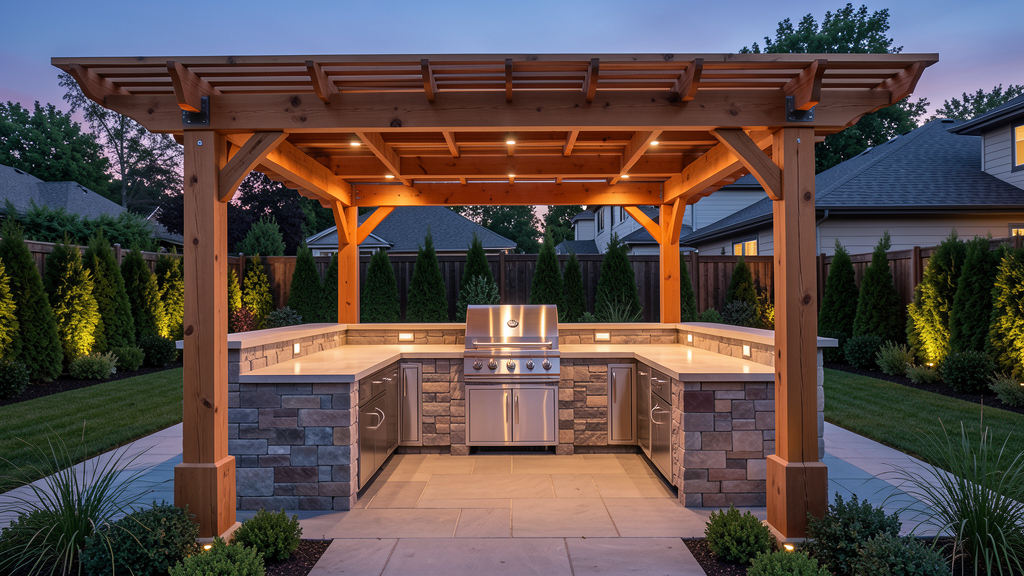
A modular kit is a good path when you want a finished cooking zone without designing every cabinet, cutout, counter edge, and storage run from scratch. It can also keep the project from turning into a full backyard construction job before you are ready for one.
The tradeoff is fit. Kits come with fixed depths, module widths, appliance openings, finish materials, and delivery constraints. A kit that looks clean in a product photo can feel oversized on a narrow patio or awkward if the grill lid opens into traffic.
Use modular when the patio has a simple shape, the utility path is clear, and the kitchen can be assembled around a known cooking style. Be more cautious when the space has slope, tight gates, unusual corners, covered ceilings, heavy wind exposure, or a deck that needs load review.
The four kit types worth comparing
1. Grill island kits
These are best for homeowners who mainly want a cleaner grill station. The island may include a grill cutout, small counter wings, doors, drawers, and a finish that looks more permanent than a cart.
Check the grill opening before anything else. Width, depth, rear clearance, fuel line location, ventilation, and access panels all matter. A mismatched built-in grill can turn a simple island into a frustrating return or retrofit job.
2. Cabinet module systems
Cabinet systems make sense when you want to build a longer prep run with storage, trash pullout, sink base, fridge opening, and corner pieces. They can feel more custom because the layout is assembled from separate parts.
The risk is assuming every cabinet line handles weather the same way. Ask about outdoor rating, corrosion resistance, hardware, cabinet bases, leveling feet, warranty exclusions, and replacement parts.
3. Ready-to-finish frames
Some kits give you the structure and let you finish the outside with stone, tile, stucco, or panels. This can be a smart middle path when the layout is straightforward but the finish needs to match the house or patio.
These kits still need careful appliance planning. Grill sleeves, vents, access doors, counters, and finish materials must be compatible with heat, moisture, freeze cycles, and local installation expectations.
4. Complete outdoor kitchen packages
Packages bundle the island, grill, storage, and sometimes refrigeration or side burners. They are convenient when the included pieces match your actual cooking style.
Do not pay for a package just because it has more appliances. Extra burners, fridges, and drawers are only useful when there is enough counter landing space, protected power, shade, and room for people to serve food without standing in the cook's way.
Modular outdoor kitchen kit comparison
| Kit style | Best for | Watch-outs |
|---|---|---|
| Grill island | Fast upgrades and smaller patios where cooking is the main goal | Confirm grill opening, fuel type, ventilation, lid clearance, and service panels. |
| Cabinet module system | Longer prep runs, storage-heavy layouts, and cleaner entertaining zones | Measure every module and verify outdoor rating, hardware, leveling, and replacement parts. |
| Ready-to-finish frame | Projects that need a custom-looking finish without a full custom build | Finish material, appliance sleeves, vents, counters, and drainage need careful planning. |
| Complete package | Buyers who want one coordinated purchase and a predictable install path | Included appliances may waste money if the layout lacks counter space or utility support. |
Layout checks before buying
Measure the working triangle outside
Outdoor kitchens still need a work pattern: cooking, prep, serving, storage, and cleanup. Measure the path from the indoor kitchen, the patio door, the seating area, and the trash location. If every plate, towel, or drink requires a long walk, the kitchen will get used less.
Leave landing space beside the grill. Leave room behind stools. Leave a path for guests who are not cooking. Also check where the grill lid, cabinet doors, trash pullout, refrigerator door, and access panels open.
Check the base before the box arrives
A modular island still needs a stable surface. Existing pavers, decks, patios, and slabs may need leveling or load review depending on the kit weight and appliance plan. If the kit spans uneven pavers or sits on a deck that was not designed for the load, the finished setup can twist, settle, or become annoying to use.
Delivery access matters too. Measure gates, steps, side yards, turns, grade changes, and the route from curb to patio. A beautiful island that cannot reach the backyard without disassembly is a stupid expensive problem.
Plan utilities with the kit in place
Fuel, electricity, water, and drainage should be planned around the final island location, not guessed from a product photo. Gas lines, outlets, lighting, refrigeration, sinks, and ice storage all add complexity. Use qualified pros where electrical, gas, plumbing, permits, or local code apply.
Materials and weather exposure
Outdoor kitchen materials live a harder life than indoor cabinets. Sun bakes finishes. Rain finds seams. Grease and smoke stain surfaces. Freeze cycles can punish porous materials. Coastal air can be rough on the wrong metal. Shade, covers, drainage, and material choice are part of the buying decision.
Before ordering, ask how the cabinets handle water, how counters are sealed, what hardware can be replaced, how the grill vents, where the shutoffs sit, and what the warranty excludes. If those answers are vague, slow down.
Also think about cleaning. A textured stone face may look great next to a pool, but grease, pollen, leaves, ash, and bugs will land there. Smooth counters, accessible drawers, and reachable service panels are less glamorous than a product render, and they matter more in year two.
Trust checks before you buy
Ask for exact dimensions and cutout specs
Get module dimensions, appliance cutouts, grill sleeve requirements, counter overhangs, and door swing information in writing. Screenshot the specs when ordering. If a retailer changes the product page later, you still need a record of what you bought.
Verify outdoor rating and warranty language
Look for outdoor-use language, climate limitations, corrosion exclusions, finish-care requirements, and whether the warranty changes near salt air, pools, uncovered patios, or freezing climates.
Confirm service access
Every grill, fridge, outlet, gas connection, and sink needs an access plan. A technician should not have to remove half the kitchen to reach a shutoff or appliance panel.
Which modular outdoor kitchen path should you choose?
| Choice | Best for | Avoid if | Decision trigger |
|---|---|---|---|
| Compact grill island | Small patios, quick cooking upgrades, and lower-complexity installs | You need a sink, fridge, trash pullout, long counter run, or bar seating | Choose this when the grill is the center and everything else should stay simple. |
| Modular cabinet run | Hosting, storage, prep space, and a more finished outdoor room | The patio cannot handle the length, depth, door swing, or utility route | Choose this when counter space and storage matter as much as the grill. |
| Ready-to-finish frame | Matching house materials, stonework, or a custom look with fewer layout variables | You do not have a clear finish plan, installer, counter plan, or vent layout | Choose this when finish quality matters but the footprint is already solved. |
| Full custom built-in | High-end remodels, unusual spaces, covered kitchens, and permanent backyard builds | You mainly need a fast grill station with predictable costs | Choose this when utilities, structure, and design control matter more than speed. |
Best fit by backyard type
Small patio
Choose a compact island with enough counter landing space and skip bulky extras that steal walking room. Check grill-lid swing, side-burner placement, and the path from door to seating.
Poolside setup
Prioritize weather-tough storage, non-slip surfaces, shade, trash access, and a serving flow that keeps wet guests away from the grill zone. Pool chemicals and splash zones make material quality more important.
Covered patio
Smoke, heat, ceiling clearance, fan placement, and ventilation come first. A covered kitchen can be fantastic, but the wrong grill placement can push smoke into the lounge area or discolor nearby finishes.
Entertaining yard
Look for counter length, trash storage, lighting, serving space, and seating that lets guests gather near the kitchen without blocking the cook. A fridge can help here, but only if protected power and weather exposure make sense.
Final recommendation
Pick the kit after the layout is proven. Start with the patio footprint, traffic path, grill size, fuel plan, counter landing space, service access, and weather exposure. Then compare modular systems that fit those constraints.
If the kit forces compromises around walking space, utility routing, service panels, or cleaning, it is probably the wrong kit. A simpler island that fits cleanly will beat a loaded package that makes the whole backyard harder to use.
FAQ
Are modular outdoor kitchen kits worth it?
A modular kit can be worth it when the layout fits your patio, the materials match your climate, and the appliance openings match the grill, storage, and utility plan you need.
What should I check before buying a modular outdoor kitchen?
Check footprint, delivery route, base requirements, counter material, grill opening size, fuel type, outlet needs, ventilation, service access, storage, weather exposure, and warranty terms before ordering.
Is a modular outdoor kitchen better than a custom built-in kitchen?
Modular kits are usually better for faster planning and cleaner budget control. Custom built-ins make more sense when the space needs exact dimensions, utilities, masonry, or a full remodel look.