
Quick answer
Choose outdoor kitchen cabinets by exposure first, storage second, and looks third.
For most homeowners, the best cabinet choice is the material and layout that can handle the patio's weather, keep water from sitting inside the boxes, leave access to appliances and shutoffs, and still let people walk around the grill without dodging open drawers.
Research links
Cabinet shopping starting points
Use these after you know the cabinet material, module sizes, door swing, appliance openings, utility route, and weather exposure you need to solve.
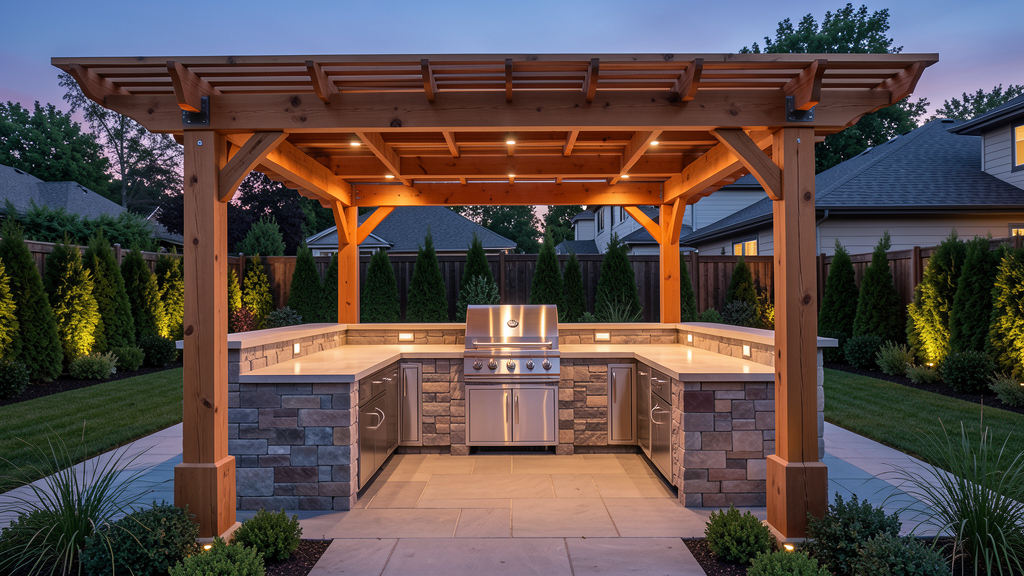
The cabinet shortlist: what is actually worth comparing
Outdoor cabinet shopping gets messy because the product photos all promise the same thing: clean doors, tidy storage, and a grill island that looks expensive. The useful comparison is less glamorous. What happens when rain blows sideways? What happens when a trash drawer is left open during a cookout? What happens when the grill needs service two years from now?
Start with five cabinet paths: stainless steel, powder-coated metal, HDPE or outdoor polymer, masonry or ready-to-finish framing, and wood or teak accent storage. Each can work. Each can also be wrong if the patio exposure, appliance plan, and maintenance tolerance do not match.
1. Stainless steel cabinet systems
Stainless steel is the classic outdoor kitchen cabinet choice because it feels at home next to built-in grills, side burners, refrigeration, and stone counters. It is usually the cleanest fit when the kitchen should look like a serious cooking station rather than loose patio furniture.
The catch is grade, finish, and environment. Stainless does not mean rust-proof forever. Chlorides from salt air, pool chemicals, cleaners, and trapped moisture can attack the wrong surface, especially around seams, scratches, crevices, and hardware. If the kitchen is near the coast or pool, ask harder questions about stainless grade, finish care, fasteners, and warranty exclusions.
2. Powder-coated metal cabinets
Powder-coated outdoor cabinets can soften the commercial look of bare stainless and make the kitchen fit the house better. Dark bronze, black, gray, white, and muted colors can look sharp under a pergola or against a stone patio.
The risk is surface damage. A strong coating helps, but scratches, chips, dropped utensils, abrasive cleaners, and rough installation can expose the material underneath. Ask whether touch-up paint exists, how panels are finished at edges, and what the warranty says about fading, corrosion, and coastal use.
3. HDPE and outdoor polymer cabinets
HDPE and other outdoor polymer cabinets are worth a hard look for wet patios, poolside kitchens, and areas where water exposure is constant. They do not behave like wood, and they avoid some corrosion worries that come with metal boxes.
The buying checks change. Look at panel thickness, internal bracing, hardware quality, hinge attachment, color-through construction, UV exposure language, heat adjacency near grills, and how the cabinet base handles uneven surfaces. A polymer box is only as good as its hardware and layout.
4. Masonry or ready-to-finish islands
A masonry or ready-to-finish frame makes sense when the outdoor kitchen is permanent and should match the house, pool wall, patio stone, or covered structure. This path can look custom without buying a full line of freestanding cabinets.
Do not let the finished stone hide bad access. Built-in grills, gas connections, outlets, sinks, refrigerators, and drains still need reachable panels. The prettiest island in the yard is a pain if a technician has to pull stone or crawl through a tiny door to reach a shutoff.
5. Teak, wood, and accent storage
Wood can look warm in a luxury patio, especially when the rest of the kitchen is stone, metal, and concrete. Teak and other outdoor-friendly woods can work as accent doors, serving consoles, or freestanding storage pieces.
This is the maintenance path. Wood changes color, needs care, and may not be the right answer next to heavy grease, direct weather, or a sink zone. Use it where warmth matters and upkeep is realistic, not as a lazy substitute for weather-rated cabinet construction.
Outdoor kitchen cabinet material comparison
| Cabinet material | Best fit | Watch-outs | Questions to ask before buying |
|---|---|---|---|
| Stainless steel | Built-in grill islands, modern kitchens, appliance-heavy layouts | Salt, pool chemicals, crevices, scratches, mixed hardware, and poor finish care can still cause staining or corrosion. | What grade is used? Are fasteners and hinges outdoor-rated? What does the warranty exclude near pools or salt air? |
| Powder-coated metal | Finished patios that need color, softer styling, and coordinated panels | Chips, scratches, fading, and edge wear matter more than the showroom photo. | Is touch-up available? Are panel edges coated? How should the finish be cleaned? |
| HDPE or outdoor polymer | Poolside kitchens, wet climates, low-corrosion setups, casual hosting zones | Hardware quality, heat exposure, rigidity, color claims, and leveling details separate good systems from flimsy ones. | How thick are the panels? How are hinges attached? What heat clearances are required near grill openings? |
| Masonry or ready-to-finish frame | Permanent custom-looking islands, stone patios, covered kitchens, remodel projects | Access panels, drainage, ventilation, and future appliance replacement are easy to under-plan. | Can every shutoff, outlet, vent, drain, and appliance panel be reached after the finish is installed? |
| Teak or wood accent storage | Serving consoles, warm patio styling, protected spots away from heavy grease | Sun, rain, finish care, swelling risk, and seasonal maintenance are part of ownership. | What care schedule is expected? Can cushions, tools, and towels stay dry inside? |
Plan the cabinet layout before choosing modules
A cabinet run is not a row of boxes. It is the working side of the kitchen. The best outdoor cabinet layout gives the cook landing space, keeps trash close to prep, stores tools where they are used, and leaves the service path open.
Start with the grill, then place storage around the mess
The grill creates heat, smoke, grease, tools, trays, and dirty utensils. Put storage where those things actually happen. A drawer bank beside the grill is useful. A tiny door cabinet under the far end of the counter may become a graveyard for random covers and half-used cleaner bottles.
Leave landing space on at least one side of the grill if the layout allows it. Add a trash pullout near prep, not across the patio. Put dry storage where rain is less likely to blow in when doors open. Keep cleaning supplies away from food tools and towels.
Measure the boring movements
Open every imaginary door before you order. Drawer banks need pullout depth. Trash units need full travel. Refrigerator doors need swing room. Grill lids need rear and overhead clearance. Bar stools need space behind them. Guests need a walking path that does not cut between the cook and the counter.
This is where many expensive outdoor kitchens get stupid. The cabinet line technically fits the slab, but the open trash drawer blocks the walkway, the fridge door hits a stool, or the grill access panel faces a wall.
Do not bury the service points
Outdoor kitchens collect utilities in a small space: gas, electricity, sometimes water, sometimes drainage, sometimes refrigeration. Every one of those needs an access plan. Gas shutoffs, GFCI-protected outlets, appliance panels, sink traps, drain lines, and vent openings should be reachable without disassembling the island.
If a cabinet seller or installer cannot show how service access works, slow down. A clean cabinet face is not worth a future repair bill that starts with demolition.
Storage that earns its footprint
More cabinets are not automatically better. Outdoor kitchens need useful storage, not a wall of empty doors. A few well-placed modules can beat a long cabinet run that steals patio space.
Drawer banks beat deep mystery cabinets for tools
Drawers are easier for tongs, gloves, thermometers, foil, skewers, towels, grill brushes, and small accessories. Deep door cabinets are better for larger items, but they can become clutter caves if there are no shelves or bins.
Trash pullouts are underrated
If the outdoor kitchen gets used for hosting, a trash pullout near prep is one of the best modules to add. It keeps plates, packaging, paper towels, and food scraps from piling up on the counter. Check pullout travel and bag size before ordering.
Sink bases need a real water plan
A sink base sounds convenient, but it adds plumbing, drainage, winterization, cleaning, and service access. In some yards, a prep sink is worth it. In others, it adds cost and maintenance while the indoor kitchen is ten steps away. Be honest about how often water outside will change your cooking routine.
Fridge cabinets need airflow and protected power
Outdoor refrigeration is useful for drinks and entertaining, but it should not be jammed into a cabinet run as an afterthought. Check ventilation, outlet location, weather exposure, drainage around the base, door swing, and whether the fridge is rated for the outdoor conditions it will face.
Which outdoor kitchen cabinet setup should you choose?
| Setup | Choose it when | Avoid it when | Cabinet decision trigger |
|---|---|---|---|
| Compact grill island with doors | You mainly cook outside and need a cleaner grill station with light storage. | You need serious prep, trash, sink, refrigeration, and serving function. | The island leaves walking room and gives access to the grill, gas, and storage without crowding the patio. |
| Drawer-heavy cabinet run | You host often and need tools, towels, trays, foil, trash, and serving pieces close to the grill. | The patio is narrow or drawers would open into traffic. | The open drawers still leave a safe path behind the cook. |
| Polymer poolside storage | The kitchen sits near splash zones, wet towels, pool chemicals, or frequent rain exposure. | The grill heat path, hardware, or cabinet rigidity is poorly documented. | The cabinet system proves water handling, hardware quality, and heat clearances in writing. |
| Stainless appliance wall | The kitchen includes built-in grill, side burner, fridge, drawers, and a modern cooking look. | Salt air, pool chemicals, or rough cleaning will punish the finish and the warranty does not cover the exposure. | The grade, finish, hardware, and care instructions match the site. |
| Masonry island with access doors | The kitchen is a permanent part of a bigger patio, pool, or covered outdoor room. | The design hides vents, drains, outlets, gas shutoffs, or appliance panels. | The service plan is drawn before stone, stucco, tile, or counters are installed. |
Cabinet trust checks before you buy
Cabinet specs matter more outdoors than they do inside. Inside, a cabinet mostly fights spills and daily wear. Outside, it fights rain, sun, pollen, grease, heat, bugs, freeze cycles, wind-blown grit, and guests who treat the counter like a buffet station.
Get the cabinet material in writing
Ask for the exact cabinet material, finish, frame construction, panel material, hinge type, drawer slide type, fastener material, feet or leveling system, and outdoor-use language. Vague phrases like weather resistant are not enough for a purchase this expensive.
Ask how water exits
Water will reach the cabinet. The question is where it goes. Look for raised bases, drainage paths, weather gasketing where appropriate, shelves that do not trap puddles, and seams that do not funnel water into storage. If the cabinet sits directly on an uneven patio, ask how leveling and water movement are handled.
Check ventilation around heat and refrigeration
Built-in grills, side burners, refrigerators, ice makers, and power outlets need the right openings and clearances. Do not assume a cabinet module is safe for every appliance of the same width. Appliance manuals and local professionals should drive cutouts, vents, fuel lines, and electrical work.
Confirm replacement parts
Outdoor cabinets live with heavy doors, wet hands, grease, wind, and changing temperatures. Hinges, slides, handles, toe kicks, panels, shelves, and pullout bins may need replacement years from now. A pretty cabinet line with no parts path is a gamble.
Read warranty exclusions before the deposit
Warranty language often matters most where outdoor kitchens are hardest on materials: coastal locations, pool areas, uncovered patios, commercial-style use, harsh cleaners, scratches, improper installation, and poor ventilation. Read exclusions before ordering, not after a stain shows up.
Common cabinet mistakes that cost money
Buying the longest run that fits the patio
A long cabinet wall can look premium and still make the patio worse. If it steals stool space, blocks circulation, or pushes seating too close to the grill, use fewer modules and spend the money on better storage placement.
Putting trash in the wrong spot
Trash belongs near prep and serving, not wherever a leftover cabinet opening happens to be. If guests must cross behind the cook to throw away plates, the layout will feel clumsy every time people gather.
Ignoring the cover and cleaning routine
Cabinets near grills collect grease. Cabinets near trees collect pollen and leaves. Cabinets near pools deal with wet hands and chemicals. Pick materials and finishes you will actually clean. If the care routine sounds annoying now, it will feel worse in August.
Assuming cabinet doors equal dry storage
Outdoor storage is not indoor pantry storage. Wind-driven rain, humidity, bugs, and temperature swings change what belongs outside. Store tools, covers, towels, serving trays, and grill gear with realistic expectations. Keep food, paper goods, and anything moisture-sensitive inside unless the storage system is designed for that use.
How this fits the rest of the outdoor kitchen plan
If you are still deciding between prefab, modular, and custom, start with the modular outdoor kitchen kit guide. If the budget is fuzzy, use the outdoor kitchen cost guide before asking for quotes. Cabinet decisions get easier when the cooking style, utility path, shade, seating, and build scope are already defined.
For structure planning, compare shade and shelter in the pergola vs gazebo guide. For the seating side of the patio, the luxury patio furniture brand guide helps separate frame, cushion, and layout choices from the cooking zone.
Final decision: buy the cabinet system that survives your actual yard
Pick outdoor kitchen cabinets after you know four things: exposure, utility access, appliance needs, and how people will move around the cook. Stainless may be the cleanest fit for a built-in appliance wall. HDPE or outdoor polymer may be better near constant water. Masonry may be right for a permanent island if the access panels are planned from the beginning.
The cabinet system to avoid is the one that only wins in a product photo. If it does not explain water paths, hardware, outdoor rating, venting, service access, door swing, and warranty limits, it is not ready for your backyard yet.
FAQ
What type of outdoor kitchen cabinet is best?
The best outdoor kitchen cabinet depends on exposure. Stainless steel and powder-coated metal work well for many built-in kitchens, HDPE or other outdoor polymer cabinets can be strong choices in wet areas, and masonry or ready-to-finish frames make sense when the island is part of a permanent build. Verify the exact outdoor rating, hardware, drainage, venting, and warranty exclusions before buying.
Are stainless steel outdoor kitchen cabinets worth it?
Stainless outdoor cabinets can be worth it when the grade, finish, hardware, and climate match the site. Salt air, pool chemicals, trapped moisture, and scratches can still create corrosion risk, so buyers should verify grade, finish care, and warranty exclusions.
Are polymer outdoor kitchen cabinets better than stainless?
Polymer cabinets can be better in wet or poolside areas when the system has strong panels, outdoor-rated hardware, good leveling, and proper heat clearances. Stainless can be better for appliance-heavy cooking walls and modern grill islands. The site exposure decides the winner.
Can regular indoor cabinets be used in an outdoor kitchen?
Regular indoor cabinets are usually a bad fit outdoors. Sun, rain, humidity, pests, grease, and temperature swings can damage materials that were never built for exterior use. Use cabinets rated for outdoor exposure.
What should I measure before ordering outdoor kitchen cabinets?
Measure the patio or slab, cabinet depth, door and drawer swing, trash pullout travel, refrigerator door swing, grill lid clearance, stool space, utility route, service-panel access, and delivery path from curb to backyard.