
Quick answer
Start with granite and porcelain/sintered stone. Add concrete, stainless, tile, or wood only when the job calls for it.
For most outdoor kitchens, the strongest first shortlist is granite or porcelain/sintered stone because both can handle real patio use when the slab, finish, support, and installation are right. Concrete is better for custom shapes. Stainless is useful for hard-working prep zones. Tile can keep costs down but adds grout care. Wood belongs in protected accent spots, not next to every grill, sink, and rainstorm.
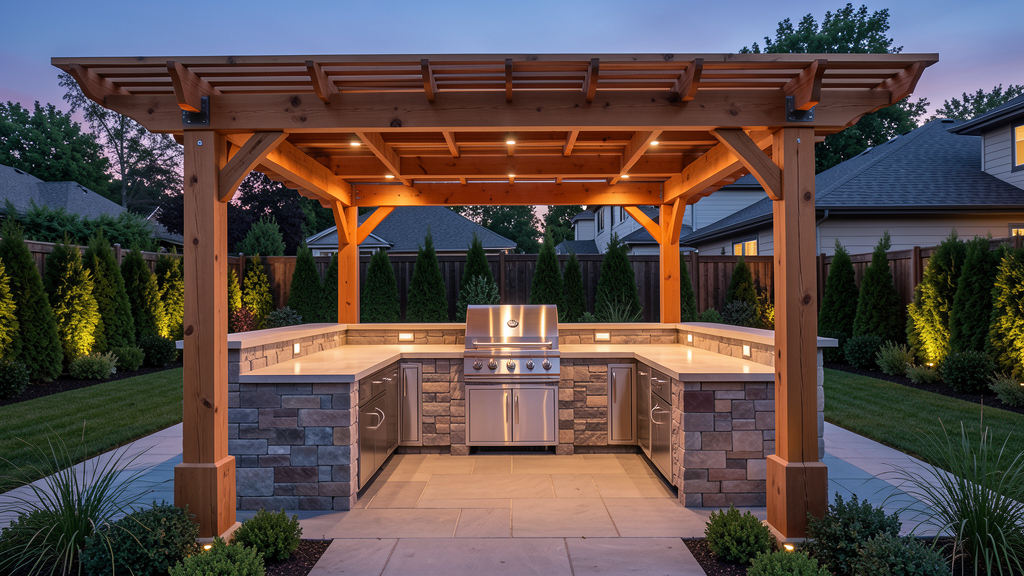
The material shortlist
Outdoor countertop shopping gets muddy fast because every material has a perfect-photo version. Granite looks permanent. Concrete looks custom. Porcelain looks crisp. Stainless looks professional. Tile looks budget-friendly. Wood looks warm. The problem is that patios are rude to pretty surfaces.
Outdoor counters deal with direct sun, hot pans, grill smoke, grease, citrus, wine, pollen, leaves, ash, pool water, freeze cycles, and people dragging trays across the edge. A material that behaves well indoors can be a headache outside if the manufacturer does not approve it for exterior use or the installer treats it like a normal kitchen slab.
Use this page as a buying filter before you order cabinets, grill cutouts, or a stone template. If you are still deciding the whole build path, start with the outdoor kitchen cost guide and the modular vs custom outdoor kitchen comparison.
Granite and hard natural stone
Granite is the safest familiar answer for many backyard kitchens. It can look finished without feeling delicate, it pairs well with built-in grills and cabinet runs, and it has a track record in exterior hardscape work when the right stone and finish are chosen.
The watch-outs are finish, sealing, stains, and stone selection. A polished dark slab may get brutally hot in afternoon sun. Some stones need more care than others. Sealers help with stain resistance, but they do not make a surface immune to wine, grease, citrus, rust marks, or careless cleaning. Ask the fabricator how that exact slab behaves outdoors, how it should be cleaned, and what finish they recommend for your exposure.
Porcelain and sintered stone slabs
Porcelain and sintered stone are strong candidates when you want a clean, modern outdoor kitchen with low water absorption and strong stain resistance. They can be excellent for a covered grill wall, a sleek bar counter, or a patio where you want thinner-looking edges than heavy stone.
The buying risk is fabrication. These slabs can chip at edges, corners, and cutouts if the wrong shop treats them casually. Overhangs, seams, sink holes, grill openings, and mitered edges need a fabricator who works with the product often. Do not buy the slab until the installer has confirmed support, edge profile, handling, cutout spacing, and appliance fit.
Concrete countertops
Concrete earns its place when the outdoor kitchen needs a custom shape, thick edge, integrated drainboard, curved bar, built-in sink, or a counter that feels poured into the architecture of the patio. It can look great with stucco, stone, steel, cedar, and modern pool decks.
The tradeoff is ownership. Concrete is a crafted surface, not a magic indestructible slab. It usually needs sealing, can stain, can show small scratches in the sealer, and may develop minor cracks. A good concrete counter can be gorgeous. A rushed one can look like a sidewalk wearing a price tag. Ask who casts it, how it cures, what sealer is used, how repairs work, and how long the project really takes.
Stainless steel
Stainless steel is not the cozy Pinterest answer, but it is very good at specific jobs. It makes sense for prep tables, side counters near messy cooking, poolside serving, fish cleaning, and appliance-heavy zones where you care more about wiping down the surface than hiding every fingerprint.
The weak points are heat, glare, scratches, dents, and vibe. A stainless counter in full sun can be hot and bright. It will scratch. It can make a residential patio feel a little commercial if the rest of the kitchen is not designed around it. Use stainless where work happens, then soften the room with stone, wood accents, furniture, lighting, and planting.
Tile
Tile can work when the budget is tighter or the design needs color, pattern, or a handmade look. It can also be easier to repair in sections than one large slab. For a sheltered counter with the right substrate and installer, tile deserves a look.
The problem is grout. Outdoor grout lines collect grease, ash, pollen, crumbs, and mildew faster than people expect. Freeze/thaw areas also need careful material selection and installation. If you choose tile, ask about exterior-rated tile, grout type, waterproofing, movement joints, edge trim, cleaning, and how the surface will age around the grill.
Wood, teak, and butcher-block-style counters
Wood belongs in the outdoor kitchen as warmth, not punishment. A teak serving shelf under cover can look fantastic. A movable prep cart can be useful. A butcher-block-style counter beside a greasy grill, sink, or uncovered edge is a maintenance bet most homeowners should think through twice.
Use wood where it is protected and easy to maintain. Keep it away from standing water, constant food grease, heavy sun, and wet towels. If the kitchen already has stone counters, metal appliances, and masonry cabinets, one wood accent can make the space feel less sterile without forcing the whole counter system to act like furniture.
Engineered quartz and other indoor-first surfaces
Quartz creates confusion because some engineered products are marketed for outside while many indoor slabs are not a good patio bet. The issue is not the word quartz. The issue is the exact product, resin system, UV exposure, heat behavior, warranty, and manufacturer approval.
If a retailer suggests quartz outside, slow down and ask for the exterior-use documentation in writing. Confirm direct-sun exposure, shade requirements, color fading risk, heat limits, edge details, and warranty exclusions. If those answers are vague, choose a material with a clearer outdoor track record.
Outdoor kitchen countertop material comparison
| Material | Best fit | Watch-outs | Ask before buying |
|---|---|---|---|
| Granite / hard natural stone | Most permanent grill islands, stone patios, and exposed kitchens | Heat in dark colors, sealing, staining, slab variation, acid-sensitive stones sold as “natural stone” | Is this exact stone recommended outdoors? What finish and sealer should be used? |
| Porcelain / sintered stone | Modern kitchens, low-maintenance counters, covered grill walls, clean bar tops | Fabrication skill, chipped edges, cutout planning, support, miter quality | Has the fabricator installed this product outside before? What supports and edge details are required? |
| Concrete | Custom shapes, thick edges, integrated sinks, poured-in-place looks | Stains, sealer upkeep, curing time, small cracks, labor quality | What sealer is used, how is it repaired, and how long does casting/curing take? |
| Stainless steel | Prep-heavy zones, poolside serving, utility counters, messy cooking | Scratches, glare, dents, hot surface in sun, commercial look | What grade, finish, gauge, backing, edge, and cleaning routine are specified? |
| Tile | Budget-conscious counters, protected patios, color or pattern | Grout cleaning, freeze/thaw details, chipped edges, uneven surfaces | Is every layer rated for exterior use, including substrate, grout, waterproofing, and edge trim? |
| Wood / teak accent | Protected serving shelves, carts, bar accents, warm design details | Sun, water, grease, swelling, finish care, seasonal maintenance | Where will it sit, how will it drain, and what maintenance schedule is realistic? |
Choose by yard conditions, not showroom samples
A countertop sample under indoor lighting tells you almost nothing about ownership. Before you pick a surface, stand where the kitchen will sit and map what the counter will see.
Uncovered patio with direct sun
Favor materials with clear exterior approval, low fuss, and finishes that do not become glare machines. Dark stone can get hot. Stainless can flash sun into the seating area. Wood can fade and dry. Porcelain, sintered stone, and appropriate granite often make the shortlist here, but confirm the exact product and finish.
Covered kitchen under a pergola, pavilion, or roof
A covered kitchen gives you more room to care about design because rain and direct sun are less aggressive. That does not remove the need for heat, grease, smoke, and cleaning checks. If the grill is under a roof or structure, also review ventilation and appliance clearance. The built-in outdoor grill guide is the next page to pair with this one.
Poolside or coastal air
Salt, chlorine, sunscreen, and constant wet towels change the decision. Metal hardware, stainless finishes, stone sealers, grout, and cabinet bases all need harder questions. Pair the counter decision with the outdoor kitchen cabinet guide so the surface and storage age together.
Freeze/thaw climate
Water is the villain. Porous materials, bad seams, poor edge details, and sketchy grout can suffer when water gets in and freezes. Ask the fabricator how the slab, substrate, adhesive, grout, and sealer behave through winter. A beautiful summer counter that spalls or loosens after two winters was never a good buy.
Small patio or narrow side yard
On a small patio, thickness and overhang are not only style choices. A deep counter can steal walkway space, block cabinet access, or make stools unusable. Measure the door swings, grill lid, trash pullout, refrigerator door, and serving path before picking an oversized island. For kit-based layouts, compare this with the modular outdoor kitchen kit guide.
Plan the counter around appliance zones
Outdoor counters fail when they are designed like decoration and then asked to behave like a cook line. A built-in grill, refrigerator, pizza oven, sink, trash pullout, and bar counter all stress the surface in different ways.
Beside a built-in grill
The counter needs landing space for hot tools, trays, raw food, cooked food, sauces, and towels. Ask about heat shields, grill sleeves, clearances, venting, and how the counter edge meets the appliance. Do not let the fabricator template the counter before the actual grill model and installation requirements are known.
Near a pizza oven
Pizza ovens create a different mess: flour, peel marks, hot pans, ash, and fast movement. A fragile edge or textured surface can become annoying quickly. If a pizza oven is part of the plan, read the outdoor pizza oven guide before locking in counter height, landing area, and heat protection.
Around a refrigerator or ice drawer
Cold appliances need ventilation, service access, drainage expectations, and a way to open the door without hitting stools or guests. The counter should not trap heat around the appliance or make service miserable. Pair this decision with the outdoor kitchen refrigerator guide.
At a sink or wet bar
Sinks punish bad seams and poor drainage. Water sits around faucets, soap, cutting boards, drink stations, and towel piles. If the counter material needs sealing, ask how the sink cutout is protected and how often the surface should be inspected. A sink also pulls in plumbing, winterization, and local code questions that a dry counter does not have.
At a seating overhang
Overhangs are where homeowners get greedy. They want bar seating, a thicker edge, and a clean floating look. Fine, but support rules are not decoration. Ask the fabricator for the approved overhang, bracket, substrate, and edge details for that material. Guessing here can crack a slab or create a counter that feels bouncy and cheap.
Countertop quote checklist before you commit
A countertop quote should answer more than color and installed price. Outdoor kitchens hide risk in support, seams, cutouts, weather, and maintenance.
- Exact material name, finish, slab thickness, and exterior-use approval.
- Template date and whether all appliances must be on site first.
- Grill, sink, refrigerator, trash, outlet, and access-panel cutout plan.
- Seam locations, edge profile, corner radius, and miter details.
- Support plan for overhangs, bar seating, corners, and long spans.
- Sealer or coating schedule, cleaning products, and stain repair process.
- Warranty exclusions for sun, heat, freeze, salt air, pool chemicals, and commercial use.
- Who coordinates the cabinet installer, grill installer, plumber, electrician, and fabricator.
- What happens if a slab chips during fabrication or a cutout does not match the appliance.
If the answers are hand-wavy, the quote is not ready. Outdoor kitchens are too expensive for “we do this all the time” energy with no written details.
Research links
Shopping starting points after the material decision
Use these after you know the surface type, appliance plan, counter length, overhang needs, and cleaning routine. Product listings are research inputs, not a substitute for fabricator specs.
Which outdoor countertop path should you choose?
| Backyard setup | Start with | Be careful with | Decision trigger |
|---|---|---|---|
| Simple grill island | Granite or porcelain/sintered stone | Oversized overhangs, dark hot surfaces, mismatched grill cutouts | Choose the surface after the grill model, cabinet depth, and landing space are known. |
| Custom covered kitchen | Concrete, granite, or porcelain/sintered stone | Complex seams, sink cutouts, roof ventilation, multiple trades | Choose the material that your fabricator and installer can detail cleanly around appliances. |
| Poolside bar | Porcelain/sintered stone, suitable granite, or stainless work zones | Salt, chlorine, wet towels, slippery edges, glare | Choose for cleaning and corrosion/stain resistance before choosing the prettiest sample. |
| Budget patio kitchen | Tile, prefab counter modules, or a smaller slab area | Grout maintenance, water intrusion, cheap substrates | Keep the counter simple and spend saved budget on base, shade, and appliance fit. |
| Warm design-focused patio | Stone main counters with wood accents | Wood beside sinks, grills, and direct weather | Use wood where hands and plates land, not where grease and rain live. |
Final decision: pick the counter that makes the kitchen easier in year two
If you want the safest starting point, price a properly specified granite and a properly fabricated porcelain or sintered stone surface for the same layout. Those two options will tell you a lot about the budget, installer pool, edge details, seams, and outdoor approval available in your area.
Choose concrete when shape and built-in character matter enough to accept sealer care and custom lead time. Choose stainless where cooking gets messy and cleaning speed beats cozy styling. Choose tile when the budget is tighter and you are honest about grout. Use wood as an accent under cover, not as the main workhorse beside every wet or greasy zone.
The boring winner is the surface that fits the appliances, survives the weather, wipes down after a cookout, leaves service access open, and does not require you to baby it every weekend. That is the counter you will still like after the first summer glow wears off.
Next step: pair this surface decision with the outdoor kitchen cabinet guide and the outdoor kitchen hub before sending a quote request.
FAQ
What is the best countertop material for an outdoor kitchen?
For many outdoor kitchens, granite or porcelain/sintered stone is the safest shortlist because both can work on exposed patios when specified and installed correctly. Concrete is strong for custom shapes, stainless steel is useful for prep-heavy zones, tile can work on tighter budgets, and wood is better as a protected accent. The best choice depends on sun, freeze risk, grill heat, staining, support, and maintenance.
Can quartz countertops be used outdoors?
Do not assume an indoor quartz slab is approved for outdoor use. Some engineered surfaces are sold for exterior applications, but outdoor approval, UV exposure, heat behavior, warranty language, and fabricator guidance need to be verified for the exact product.
Do outdoor kitchen countertops need to be sealed?
Some stone and concrete counters may need an impregnating sealer or other surface protection. Sealer makes a surface more stain resistant, not stain proof. Ask the fabricator what the material needs near grease, citrus, wine, smoke, pool water, and winter weather.
Is concrete a good outdoor kitchen countertop?
Concrete can be a good outdoor countertop when you want a custom shape, integrated sink, thick edge, or built-in look. It needs a skilled fabricator, curing time, sealer maintenance, and realistic expectations around stains, small cracks, and surface wear.
What outdoor countertop is easiest to clean?
Smooth porcelain or sintered stone, properly specified granite, and stainless prep surfaces are usually easier to wipe down than textured stone, rough concrete, or tile with lots of grout. The easiest surface is the one with fewer seams, reachable edges, and a cleaning routine you will actually follow.