
Direct answer
Choose modular for a clean, controlled install. Choose custom when the yard refuses standard sizes.
A modular outdoor kitchen is the better starting point when you want a faster grill island, cabinet run, or preconfigured package on a simple patio. A custom outdoor kitchen is the better path when you need exact dimensions, built-in utilities, masonry, unusual corners, a covered cooking room, or a permanent entertainment layout that should feel designed into the property.
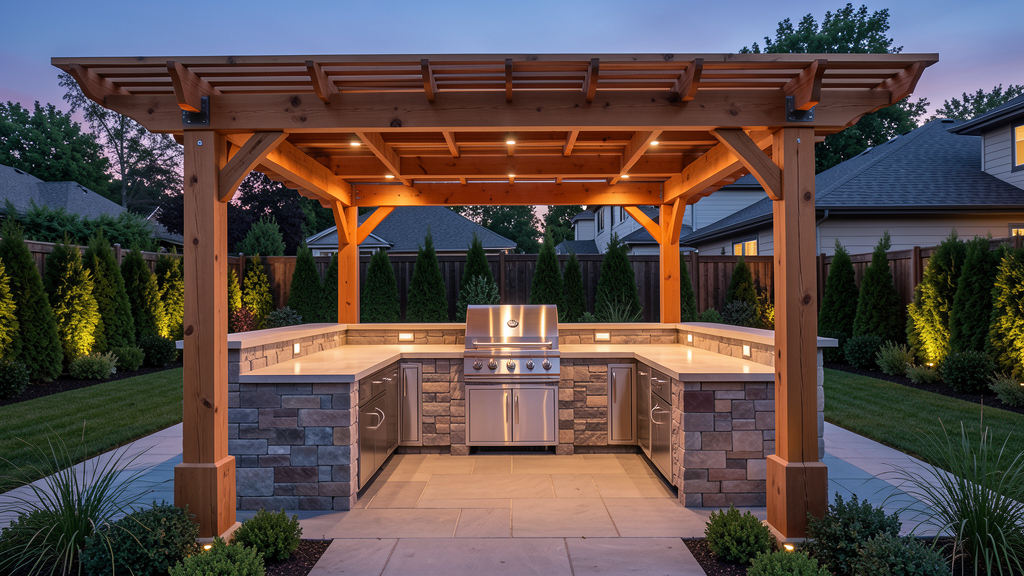
The decision split
Modular and custom are not quality levels. They are different ways to control risk. Modular controls risk by limiting choices. Custom controls risk by designing around the site. The mistake is picking one for the wrong reason.
If your patio is rectangular, close to the house, already level, and mainly needs a grill, storage, and prep counter, modular can be a very sane path. You can compare fixed island sizes, cabinet modules, appliance openings, and delivery requirements without turning the project into a mini construction saga.
If the kitchen needs to tuck around a pool, sit under a pergola, match masonry, work with a long utility run, wrap a corner, or support frequent hosting, custom may save you from fighting the space. It costs more attention up front, but it can prevent years of awkward door swings, poor smoke movement, bad counter placement, and service headaches.
Modular vs custom outdoor kitchen comparison
| Decision factor | Modular outdoor kitchen | Custom outdoor kitchen |
|---|---|---|
| Best fit | Simple patios, grill islands, cabinet runs, and buyers who want a defined package. | Permanent backyard builds, unusual spaces, covered cooking rooms, and exact layout needs. |
| Budget control | Easier to compare because modules, kits, and packages are visible before ordering. | Depends heavily on scope, trades, utilities, counters, finish work, and change orders. |
| Layout flexibility | Limited by module depth, cabinet widths, grill openings, and package options. | Can be sized around traffic flow, seating, appliances, posts, walls, and utility routes. |
| Speed | Usually faster when the surface, utilities, and delivery path are simple. | Usually slower because design, trade scheduling, permits, materials, and site work stack up. |
| Biggest risk | A fixed island that technically fits but crowds the patio or blocks service access. | A beautiful plan that keeps expanding because the scope was never pinned down. |
| Best buyer | Someone who wants a clean cooking station without redesigning the whole yard. | Someone building a long-term outdoor room around cooking, hosting, shade, and storage. |
When modular is the smarter buy
You want the kitchen to stop growing
Outdoor kitchens have a sneaky way of turning from grill plus counter into grill, fridge, sink, trash, pizza oven, bar seating, roof, lights, heaters, and a contractor group chat nobody asked for. Modular helps when the real goal is a nicer cooking station, not a backyard remodel.
The patio has a simple footprint
Modular works best on a level slab, paver patio, or reinforced surface where the island can sit without weird shims, long utility runs, or tight corner gymnastics. Fixed depths are the point. They make ordering easier, but they punish fuzzy measuring.
You can accept the appliance rules
Every modular system has constraints: grill cutout width, vent placement, cabinet depth, counter overhang, access panel location, hinge swing, leveling feet, and sometimes brand-specific appliance compatibility. That is fine if you check it before buying. It is miserable if the grill arrives after the island and the opening is wrong.
You care about reversibility
A modular cabinet run or grill island can be easier to change later than masonry. If you are still learning how often you cook outside, this matters. A clean modular setup lets you test the routine before burying every decision in stone and utility work.
When custom is worth the work
The yard has a weird shape
Custom earns its keep when the kitchen needs to wrap a corner, avoid a pool path, respect pergola posts, fit a retaining wall, face a view, or leave room for a dining table. Modular pieces can handle some of that. They cannot fix a layout that needs exact dimensions.
The utilities are part of the design
Gas, electrical, plumbing, drainage, refrigeration, lighting, and outlets should not be guessed from a product photo. A custom project can place appliances around service access and shutoffs instead of hiding those items behind whatever cabinet happens to fit.
You are building a real outdoor room
If the kitchen sits under a roof, beside lounge furniture, near a pool, or inside a larger patio plan, custom may make the whole yard feel calmer. Counter height, bar depth, lighting, fans, smoke direction, trash storage, and serving flow can all be designed together.
You need material continuity
Some homes look better when the outdoor kitchen matches existing stone, stucco, concrete, tile, or architectural lines. That does not mean custom is automatically better. It means the finish layer is part of the project, and a standard cabinet package may look like it landed from another yard.
Utility, permit, and clearance checks before either path
The build path does not remove the boring checks. Modular still needs proper fuel, outdoor-rated electrical, stable support, drainage, ventilation, and service access. Custom still needs product manuals, appliance specs, and clear scope boundaries. Pretty counters do not make a gas line, outlet, sink, or grill vent safe by magic.
- Fuel: confirm propane or natural gas plans, shutoff access, hose routing, and grill manual requirements before the island location is final.
- Electrical: refrigerators, lighting, outlets, igniters, fans, and audio all need protected outdoor power planned by qualified pros where required.
- Water and drainage: sinks sound convenient until the drain plan, winterization, and local plumbing rules show up.
- Ventilation: grills under covers, near walls, or inside enclosed islands need careful review of manufacturer guidance and local code.
- Permits and HOA: rules vary by location. Ask before trenching, running gas, adding plumbing, building roofs, or creating a permanent structure.
- Service: every appliance needs a repair path. A technician should not have to demolish stonework to reach a connector or panel.
For budget planning before quotes, use the outdoor kitchen cost guide. If modular still looks right after those checks, compare systems in the modular outdoor kitchen kit guide.
The patio fit test
| Test | If the answer is clean | If the answer is messy |
|---|---|---|
| Can you tape the island footprint and still walk around it? | Modular stays in play. | Custom sizing or a smaller scope may be safer. |
| Does the grill lid open without blocking guests or counters? | A fixed grill island can work. | Rework the layout before buying appliances. |
| Is the utility route short and obvious? | Modular can keep the project contained. | Custom planning may expose fewer surprises. |
| Will the counter have landing space on both sides of the grill? | The kitchen can function as more than a pretty box. | Add counter length or simplify the appliance plan. |
| Can a person service the grill, fridge, sink, and shutoffs later? | The build path is maintenance-friendly. | Do not order yet. Service access is a real ownership cost. |
| Does shade or cover make smoke worse? | You can design for comfort and ventilation together. | Get pro input before placing grills under structures. |
Three buyer scenarios
The weeknight griller
Choose modular. A compact island, storage drawer, trash pullout, and solid counter landing space will probably beat a large custom build. Spend the saved effort on lighting, a cover, a prep cart, and a seating path that does not crowd the cook.
The frequent host
Start modular only if the layout can handle counter space, trash, drinks, serving, stools, and a route from the indoor kitchen. If guests will gather near the grill, custom may be worth it for traffic flow alone.
The full backyard remodel buyer
Custom is usually the stronger path when the outdoor kitchen is one part of a larger yard: pergola, dining area, lounge, heaters, lighting, planting, and maybe a pool. The kitchen should not be a freestanding object fighting the rest of the plan.
Trust checks before paying anyone
For modular quotes
- Get module dimensions, appliance cutouts, counter overhangs, door swings, and leveling requirements in writing.
- Ask how cabinets handle rain, sun, freeze cycles, pool splash, coastal air, grease, and replacement parts.
- Confirm delivery method, curb-to-patio access, assembly responsibility, return limits, and warranty exclusions.
- Make sure the grill, fridge, sink, and storage pieces can be serviced without removing half the island.
For custom bids
- Separate appliance, cabinet, counter, masonry, utility, lighting, permit, and labor costs instead of accepting one vague number.
- Ask who owns appliance compatibility, vent placement, countertop templating, finish sealing, and utility inspections.
- Define change-order rules before demolition or trenching starts.
- Review how winterization, cleaning, covers, and service access will work after the pretty photos are done.
Research links
Shopping starting points after the layout is proven
Use these after you know the build path, footprint, fuel type, counter needs, utility plan, and service access. Verify dimensions, manuals, outdoor rating, warranty language, and local requirements before buying.
Research notes used for this guide
This guide was written from outdoor kitchen planning sources, manufacturer category pages, and OLL's existing kitchen cluster. This Old House planning material emphasizes location, counter space, utilities, lighting, winterization, and permit questions. NewAge outdoor kitchen pages show how modular cabinet lines market preconfigured sets, stainless and aluminum construction, weather resistance, corrosion resistance, and UV-resistant finishes.
Those sources are useful, but product pages are not a substitute for your site plan. Treat every listing as a starting point. The final call should come from measurements, manuals, local rules, and qualified trade input where gas, electrical, plumbing, or structures are involved.
Final decision
Choose modular if the taped footprint works, the utility route is simple, the appliance openings match, and the patio still has room for prep, serving, seating, and service access. That is the clean win: a better outdoor cooking station without turning the whole yard into a construction project.
Choose custom if fixed modules force bad compromises. If the grill needs a specific vent plan, the counter has to wrap a corner, the kitchen sits under a roof, the finish needs to match the house, or the yard is being rebuilt around hosting, custom is not vanity. It is how the kitchen stops fighting the property.
The worst choice is the expensive middle: a modular package stretched beyond its limits, or a custom build with no disciplined scope. Tape the footprint, map the utilities, choose the cooking routine, then spend.
FAQ
Is a modular outdoor kitchen cheaper than a custom outdoor kitchen?
A modular outdoor kitchen is often easier to budget because the cabinets, island, or package are defined before installation. The final cost still depends on delivery, base work, utilities, appliance openings, weather protection, and local installation requirements.
When is a custom outdoor kitchen worth it?
A custom outdoor kitchen is worth considering when the space needs exact dimensions, built-in utilities, masonry, a covered cooking room, unusual corners, or a long-term hosting layout that modular pieces cannot solve cleanly.
Can a modular outdoor kitchen look built in?
Yes, some modular cabinet systems and ready-to-finish frames can look permanent when the footprint, counter, finish panels, appliances, and surrounding patio are planned together. The risk is forcing fixed modules into a space that needs a true custom layout.
What should I decide before choosing modular or custom?
Decide the cooking style, patio footprint, utility route, grill size, storage needs, counter landing space, shade plan, service access, and maintenance tolerance before choosing modular or custom.