
Quick answer
Buy the outdoor kitchen sink after the water and drain plan is real.
The best outdoor kitchen sink is not automatically the biggest basin or shiniest faucet kit. Start with the job it must handle, the counter space you can spare, the legal drain path, shutoff and winterization access, faucet exposure, splash control, and how the sink changes the grill, fridge, trash, and serving flow around it.
Research links
Sink shopping starting points
Use these after you have sketched the counter run, asked how wastewater will be handled, and confirmed who is responsible for plumbing, shutoff access, and freeze protection.
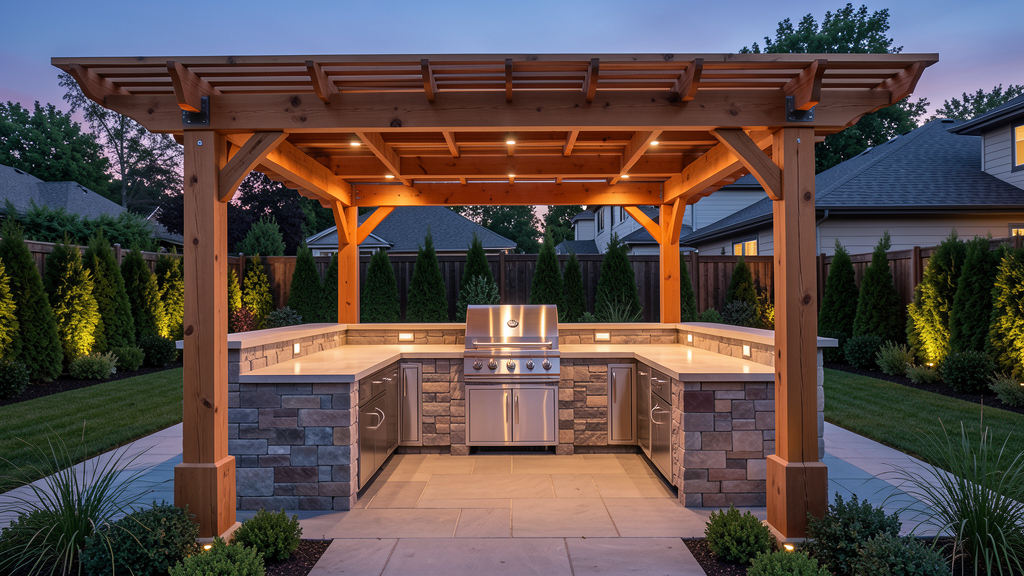
Choose the sink by job, not by catalog photo
Outdoor kitchen sink shopping gets fuzzy because one product photo can imply a whole outdoor bar: faucet, cutting board, ice, drinks, prep, cleanup, happy people, no plumbing problems. The actual decision is less glamorous. What do you need water to do outside?
A hand-rinse sink near the grill is different from a wet bar sink, a food prep basin, a fish-cleaning station, or a full cleanup sink for greasy grill tools. The right choice changes basin depth, faucet height, drain plan, counter layout, backsplash needs, trash location, towel storage, and how often the station must be cleaned.
Small bar sink
A compact bar sink fits patios where the main job is rinsing hands, filling a pitcher, washing limes, dumping melted ice, or keeping guests from walking inside with sticky glasses. It can be a smart upgrade when counter space is tight.
The problem is expectation creep. A small basin can be irritating for grill grates, sheet pans, cutting boards, and larger serving pieces. If the sink is too small for the mess you make, people will still carry dirty tools inside.
Prep sink near the cooking zone
A prep sink belongs close enough to the grill and counter to support food handling, but not so close that wet guests or hand washers crowd the hot zone. It works best with a landing counter, trash or compost spot, paper towel or towel hook, and a surface that can handle splash.
If you prep raw meat outside, keep the station disciplined. The FDA's safe food handling guidance is built around clean, separate, cook, and chill habits, including washing hands and surfaces often and using clean cutting boards and utensils. An outdoor sink helps only if the surrounding counter, trash, towels, cooler or fridge, and cleanup routine support those habits.
Large basin for cleanup
A larger sink can handle tongs, trays, cutting boards, grill baskets, and messy tools better than a bar basin. It also needs more counter depth, a stronger cabinet plan, better splash control, and a drain setup that can handle the way you cook.
This is the sink to consider when the outdoor kitchen already has serious cooking duties. It is overkill if the patio is mainly a drinks-and-burgers station with limited counter space.
Sink and ice bin or cocktail station
Some buyers want a wet bar more than a cooking sink. That can make sense near a pool or lounge zone where guests mix drinks, grab water, and rinse glassware away from the grill.
Plan it as a bar, not as a random sink dropped into the island. You may need bottle storage, trash, towel space, lighting, non-slip flooring, and a drain route that does not turn the bar side of the patio into a puddle zone.
Outdoor kitchen sink comparison
| Sink path | Best fit | Avoid if | Decision trigger |
|---|---|---|---|
| Compact bar sink | Drink stations, hand rinsing, small patios, and guest-side counters | You expect it to clean grill grates, large trays, or heavy cooking messes | Choose it when saving counter space matters more than cleanup capacity. |
| Medium prep sink | Outdoor kitchens where food prep, produce rinsing, and hand washing happen near the grill | The only available location forces guests into the cooking lane | Choose it when it can sit beside landing counter, trash, towels, and clean water access. |
| Large cleanup sink | Serious cooking islands, frequent hosting, and messy grill or pizza oven tools | Drainage, splash, cabinet depth, or winter shutoff access is unresolved | Choose it when the plumbing and counter plan can support real cleanup. |
| Wet bar sink with accessories | Pool bars, cocktail counters, and lounge zones away from the grill | You mostly need a practical cooking sink, not a drink station | Choose it when the bar has storage, trash, lighting, and guest traffic planned around it. |
| No built-in sink yet | Phased kitchens, rental homes, uncertain layouts, or budgets that need discipline | You already have approved plumbing and a clear daily use case | Delay the sink when the drain path and winter routine are still hand-wavy. |
Plumbing, drain, and winter checks come before the cart
Do not guess the drain route
The drain is the part that turns a sink from a product purchase into a small construction decision. Some homes may tie into sanitary plumbing. Some sites may involve a septic system. Some buyers ask about dry wells, landscape drains, or temporary catch buckets. The correct answer depends on local plumbing rules, stormwater rules, health rules, septic constraints, and what actually goes down the sink.
Grease, food scraps, soap, citrus, cocktail waste, and dirty grill water are not the same as a little rain on the patio. Before ordering a sink, ask a licensed plumber or local building department what drain path is allowed for your property. If the answer is unclear, keep the sink out of the permanent counter until it is clear.
Septic homes need a stricter cleanup plan
If the home uses septic, be careful with what the outdoor kitchen sends into the system. EPA septic care guidance says not to flush cooking grease or oil and warns that fats, grease, and solids can increase drainfield clogging risk. That does not mean every outdoor sink is forbidden. It means the plumbing and owner routine need to be boringly specific.
Scrape plates into trash, keep a real trash pullout near the sink, skip dumping greasy pans outside, and ask the septic professional how the outdoor kitchen should connect, if it should connect at all.
Plan shutoffs where humans can reach them
Outdoor plumbing should have reachable shutoff access. If the valve is hidden behind a fixed stone panel, behind a fridge, or under a counter nobody can reach, the first leak or freeze warning becomes a circus.
Access doors are not decorative filler here. Put shutoffs, drain-down points, trap access, supply lines, and any filters or serviceable parts where a person can actually work on them.
Freeze protection changes the whole design
In freeze climates, the sink is only as good as its winter routine. Supply lines, faucet bodies, spray hoses, traps, and low spots can hold water. A covered island may still freeze. A pretty faucet can still crack.
Ask the plumber how the lines will be shut off, drained, blown out if needed, insulated if appropriate, and reopened in spring. If the design cannot be winterized without crawling under the island with a flashlight and rage in your heart, fix the design.
Buyer risks that make outdoor sinks expensive
The sink is bought before the plumber sees the site
A sink can look simple online, then run into wall penetrations, slab routing, drainage rules, septic concerns, freeze exposure, or an awkward shutoff location. Get the site checked before cutting the counter.
The faucet is indoor-pretty, outdoor-annoying
Outdoor faucets face sun, rain, pollen, dust, hard water, freeze cycles, pool splash, and rough use. Verify the manufacturer's allowed use, finish care, cartridge access, handle clearance, and hose exposure before assuming an indoor kitchen faucet belongs outside.
The basin steals the only prep counter
A sink needs space around it. If the basin replaces the only landing zone beside the grill, the kitchen may gain water and lose the surface that actually makes cooking easier.
The drain becomes a smell or pest problem
Food scraps, sticky drink waste, grease residue, and standing water attract trouble. The sink station needs trash, cleaning supplies, a way to rinse and dry surfaces, and a drain plan that does not leave organic sludge in a warm cabinet.
Materials, faucet, and counter fit
Stainless is common, but details still matter
Stainless steel is the common outdoor kitchen sink path because it pairs with grills, cabinets, and appliances. Still, do not buy by the word stainless alone. Compare gauge, finish, basin shape, mounting style, drain parts, sound pads if present, included faucet quality, cover availability, corrosion notes, and the care instructions for your climate.
Coastal air, pool chemicals, fertilizer overspray, hard water, and neglected winter storage can be rough on metal. If the kitchen is near salt air or a pool, read the warranty and maintenance language like a suspicious adult.
Drop-in versus undermount is a cleaning decision
Drop-in sinks are common in outdoor counters because the rim can be more forgiving during installation and replacement. The tradeoff is a rim that can collect dirt, crumbs, pollen, and sauce around the edge.
Undermount sinks can look cleaner under stone or porcelain counters, but they make support, sealing, fabrication, and future replacement more important. Coordinate this with the outdoor kitchen countertop decision before the slab is cut.
Faucet height and handle swing deserve a dry run
Tall faucets help with pitchers and large pieces, but they can splash in a shallow basin or hit an upper shelf, window, backsplash, or cover. Pull-down sprayers are useful, but the hose and head need protection from weather and freezing.
Mock up the movement before buying: faucet height, handle direction, splash line, cover fit, cutting board location, and where wet hands will reach for towels.
Do not forget the cabinet under the sink
The cabinet below the sink is not bonus storage unless the plumbing leaves room and stays protected. Sink bases have drains, traps, supply lines, valves, maybe a filter, and sometimes a disposal request that deserves a hard no outside unless a qualified pro approves the whole setup.
If you are still choosing cabinets, use the outdoor kitchen cabinet guide alongside the sink decision. A pretty cabinet run that hides the plumbing too well is not a win.
Placement mistakes that ruin the station
Too close to the grill
The sink should help the cook, not invite guests to lean into the hot zone. Keep enough space for the grill lid, tools, trays, grease movement, and a person cooking without someone reaching past them for water.
If the grill is still being chosen, work through the built-in outdoor grill guide before fixing the sink location.
Too far from trash and towels
A sink without nearby trash is how food scraps end up in the basin. A sink without towels is how water gets tracked across stools, counters, and the patio. Add trash, paper towels or washable towels, cleaning spray, and a small drying zone to the plan.
Blocking the fridge, drawers, or serving side
The sink base, faucet, open cabinet doors, trash pullout, fridge door, drawer stack, and bar stools all need to move. A wet bar that blocks the outdoor kitchen refrigerator or crowds the serving counter will feel poorly planned even if every appliance is nice.
No lighting over the wet zone
Outdoor sinks get used at dusk, after dinner, and during cleanup when everyone is tired. If you cannot see the drain, knife, glassware, or cutting board, the sink becomes a dark hole in the counter. Add task lighting before the backsplash and structure decisions are final.
Pre-order checklist for an outdoor kitchen sink
| Check | Why it matters | Proof to collect |
|---|---|---|
| Sink job | Bar rinsing, food prep, and cleanup need different basin sizes | Use case list and items the basin must fit |
| Drain path | Wastewater rules vary by property and local code | Plumber or building department guidance before counter cutting |
| Water supply | Hot, cold, potable supply, and shutoff access change cost and complexity | Plumbing plan, valve location, and service access drawing |
| Freeze plan | Exposed lines and faucet parts can fail in cold weather | Written winter shutoff, drain-down, and reopening routine |
| Counter cutout | The sink must match the counter material and mounting method | Template, fabricator approval, support details, and replacement path |
| Faucet exposure | Sun, rain, pool splash, salt air, and freeze cycles affect durability | Manufacturer use language, finish care, and cartridge access notes |
| Cleanup support | A sink without trash, towels, and storage gets gross fast | Nearby trash, towel, soap, cleaning supply, and drying-zone plan |
How the sink fits the full outdoor kitchen build
A sink is rarely the first outdoor kitchen item to buy. It depends on the island layout, cabinet base, counter material, water route, drain route, grill location, refrigeration plan, trash access, lighting, shade, and winter storage routine. If those pieces are still moving, use the outdoor kitchen cost guide and modular outdoor kitchen kit guide before locking a sink into a permanent counter.
Spend on the sink when it removes real trips inside, supports safer prep habits, and has plumbing that will not make future-you hate past-you. Skip it or delay it when the drain path is vague, the sink steals needed prep counter, or the patio still needs shade, lighting, storage, or a better grill setup more urgently.
Source notes used for this guide
This guide uses plumbing-first buying logic because outdoor sink requirements vary by site, climate, local code, septic setup, and product manual. FDA safe food handling guidance was checked for the clean, separate, cook, and chill framework, including washing hands and surfaces often during food prep. EPA septic care guidance was checked for warnings about cooking grease or oil and fats, grease, and solids entering septic systems.
Use those sources as general ownership context. Use the current sink and faucet manuals, local plumbing rules, and a licensed plumber for the exact water supply, drain, shutoff, and freeze-protection plan.
Final decision: which outdoor kitchen sink should you buy?
Buy the sink that matches the job and the plumbing reality. For a small patio bar, that may be a compact stainless bar sink with a simple cold-water setup and a drain route approved before the counter is cut. For a serious cooking island, it may be a deeper prep or cleanup sink with hot and cold water, reachable shutoffs, trash beside it, task lighting, and enough landing counter to keep the grill flow sane.
If two sinks look similar, choose the one that creates fewer permanent annoyances: easier counter fit, better faucet access, cleaner drain service, more practical basin shape, and a winter routine you will actually do.
The sink to avoid is the impulse add-on. If nobody can explain where the wastewater goes, how the lines shut off, what happens in freezing weather, or where wet tools dry, the sink is not ready. Water is useful outside. Unplanned water is just a leak with better branding.
FAQ
What is the best sink for an outdoor kitchen?
The best outdoor kitchen sink is the one that fits the counter opening, uses outdoor-suitable materials and faucet parts, has a legal drain plan, leaves plumbing access, and matches the actual job: hand washing, drink prep, produce rinsing, grilling cleanup, or a full wet bar.
Does an outdoor kitchen sink need hot water?
An outdoor kitchen sink does not always need hot water, but hot water can matter for greasy tools, frequent food prep, and more serious cooking. Cold-only sinks can still be useful for hand rinsing and drink stations if the plumbing and drain plan are clean.
Can an outdoor kitchen sink drain into the yard?
Do not assume an outdoor sink can drain into the yard. Local plumbing, stormwater, septic, and health rules control where wastewater can go. Ask a licensed plumber or local building department before planning a dry well, landscape drain, sewer tie-in, or septic connection.
How do you winterize an outdoor kitchen sink?
Winterization depends on the plumbing design and climate. Many setups need shutoff valves, drain-down access, protected supply lines, faucet protection, and a way to clear water from exposed lines before freezing weather. Confirm the routine with the plumber who installs the sink.
Is a bar sink enough for an outdoor kitchen?
A bar sink is enough if the main jobs are drinks, hand rinsing, and light prep. It is usually too small for grill grates, large trays, cutting boards, and heavy cleanup. Match the basin to the mess you actually make outside.
Should the sink go next to the grill?
The sink should be close enough to support prep, but not so close that guests crowd the cook or water splashes the hot zone. Leave room for counter landing space, tools, trash, towels, and the grill lid or access panels.